

Food for thought. An important intervention that is needed to redefine criminal justice is to go back on track, to re-establish and jealously guard meritocracy systems within the justice, law and order sector.
The Police Force
The Police Force is the front line who have the power to make or break a case. It would appear that the unit that is intended to police the police, the Police Professional Standards Unit (PSU), is not as independent and as empowered as it should be.
A more independent PSU that transparently investigates and publishes reports on complaints from people about the police can surely make police officers think twice, before they choose to connive with criminals to make cases go away.
As highlighted by Uganda Law Society (ULS), among challenges facing Uganda’s criminal justice system is a 358% prison congestion.
The total capacity for our country’s prisons is only 22,203 inmates; but these days there can be as many as 79,500 inmates in prison at a given time, so the ULS has established.
Worse more, 55% of inmates are on remand; and, in some cases, while incarcerated, they wait as long as 11 years to have their day in Court for a bail hearing. A gross injustice ULS has found!
I dare surmise that a major contributor to prison congestion and long incarceration in remand, has everything to do with how the Police handled the relevant case files.
Case in point, my story – click here to read it.
The Police Crime Report 2024 is disturbingly revealing. A whopping 41.5%, nearly half, of cases reported to the Police in 2024, remained still under inquiry and were reportedly still being investigated by the Police by end of the year.
Only, 37.4% of cases reported to the police were fully investigated, sanctioned by the Office of the Director of Public Prosecution (ODPP) and taken to Court within the year. Of which, however, by the end of the year, the majority, 53.3% were pending determination by Court.
It would be interesting to learn the findings of ULS of the content of the police case files of the indigents in prison that ULS interacted with and provided services during its pro bono week 2024.
- Are the Police case files even there?
- If so, what is the content of the evidence in them that merited the incarceration of the accused?
- Has the Police, moreover, given the accused full access to their respective case file with full disclosure?
I am perturbed by how difficult it is for a justice seeker to have full access to their respective police case files.
When I report a crime, I should surely be able to have full access to the response of the accused and vice versa. Without such transparency, it is not far fetched to deduce the likelihood that hundreds are wrongly incarcerated.
The ODPP
The lack of case files and the poor quality of police case files is a direct indicator of an unholy alliance between the Police and ODPP.
It is no longer sufficient for the focus on anti-corruption within the ODPP to be an exchange of a cash bribe. Those given the privilege to serve in the ODPP should be held accountable also for the dumbfounding decisions that they make that perpetuate injustice. As I am experiencing current.
ODPP not doing its job is the recipe that nurtures and contributes to case backlog and delayed investigations.
Surely, I am not being extreme in asserting that on matters Pallisa CRB 518 of 2021, as described in my story, I was denied justice on account of the actions and decisions not only of the Pallisa District Criminal Investigations Directorate, but also of the ODPP.
Justice delayed is justice denied. Four years, is an unacceptable long duration for a complaint against the ODPP to be investigated and for the complainant to be made whole. I still wait to be made whole.
Judiciary
Presence of judicial officers with questionable integrity and legal incompetence within the Judiciary, really!
Surely the norm when an appellant Court rules that the decisions of a ‘learned Deputy Register’ are “appalling to say the least”, should trigger a review of sorts. It should sound alarm bells about the possible lack thereof of integrity or likely incompetence of the judicial officer, or both.
And that is why I join those who are demanding more transparent processes of how judicial officers get appointed.
I, for one, would cheer loudly when the kind of Judicial Service Commission (JSC) is in place that holds judicial officers to account for the court rulings and decisions that they make.
Ensuring that one who makes “appalling rulings to say the least” should not easily rise up the ranks.
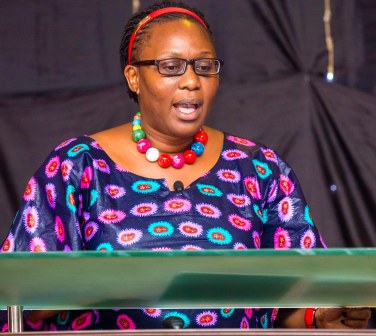
 This proposition I first made as part of the keynote address at the “ULS Pro Bono Week High-Level Stakeholder Engagement on Redefining Uganda’s Criminal Justice System,” that was held on Friday, 25th July 2025, at the ULS House, John Babiiha Avenue, Kampala
Featured photo – lunch at ULS




 Humanist
Let’s Chat…