There are a few things that must take place to succeed on some of those plans.
“Cotton, we are going to emphasize not only production of cotton, but also value addition.” In other words, cotton cloth etc.
There must be a ban on all second hand (used) clothes donated from overseas and sold cheaply all over the country, for local cotton so called “added value programs” to succeed.
Here is the tricky part about developing nations trying to export to developed nations, price influence through agricultural subsidies of developed countries.
One has to understand how subsidies work in developed nations to be able to plan effectively for those markets.
Here is a simplified version that goes to the point, “Our crazy farm subsidies, explained.”
And it is not that this unfair competition has been known for some time. “Developing countries blast rich-world farm subsidies at Rome Talks.”
Of the countries studied by the OECD, 94 percent of subsidies were spent by Asia, Europe, and North America—leaving only 6 percent for the rest of the world. EU spent over $106 billion on agricultural subsidies in total.
However, there are some areas that Uganda has an advantage in, and it is in Organic farming. Simple reason, for example in U.S. organic farming doesn’t get subsidies and there is a short supply of anything organic.
The organic food revolution that is minting millionaires.
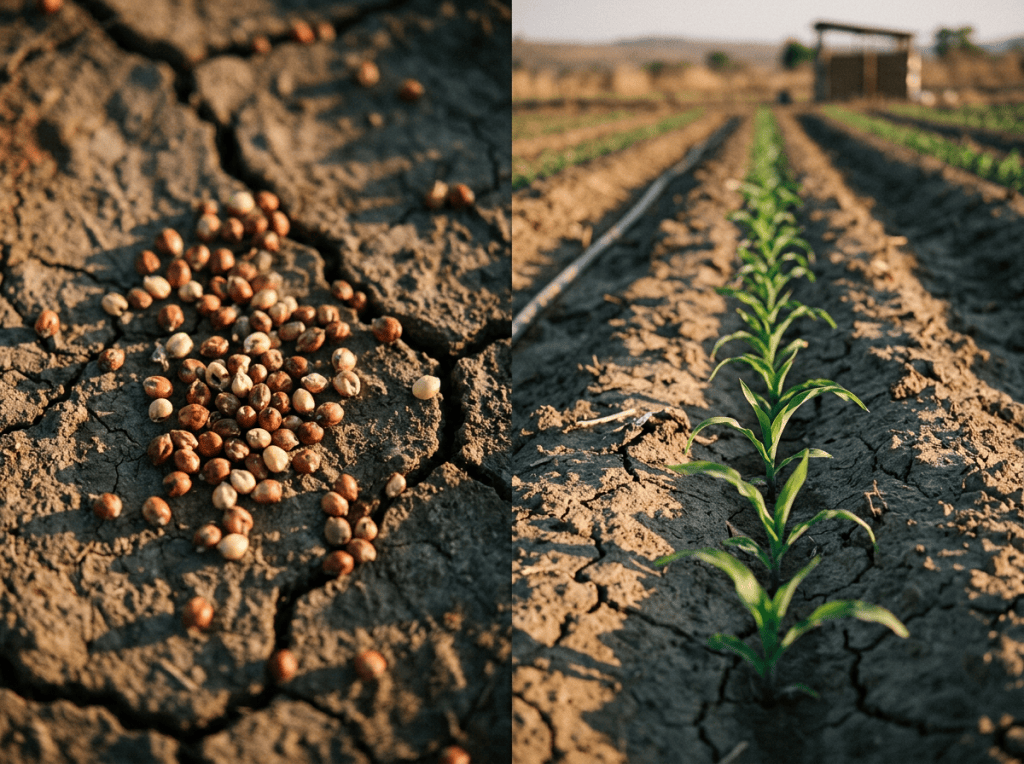
I don’t understand how the minister of agriculture could have mentioned fertilizers’ contribution to increasing production, but forgot to mention irrigation, especially with this global warming that brings about un-predictable droughts.
Unless the value of irrigation is appreciated and given investment into, we will keep looking up the sky waiting for rain manna to fall from heaven. Instead of using the water manna that God gave us long ago and is kept safely under the ground.
The role of water in agricultural development.
The problem is that Africans believe in free lunch. Case in point:
“In December 2015, the International Federation of Red Cross and Red Crescent Societies (IFRC) launched an Emergency Appeal of 950,205 Swiss francs to meet the food security needs of 11,500 people affected by the drought in Namibia. However, the Appeal has only been funded 15 percent, which means that only 1,200 people are being supported with drought relief by the Red Cross (source).”
How much investment has Namibian government put into irrigation since 2012 when massive aquifers were discovered?
Africa massive water source found under Namibia could last 400 years.
Too soon to tap Namibia’s groundwater find, experts say. –
Your guess is as good as mine why Namibia was told that it was too soon to tap underground water, yet longer droughts are causing famine and deaths.
“A disturbing trend in the water sector is accelerating worldwide. The new “water barons” — the Wall Street banks and elitist multibillionaires — are buying up water all over the world at unprecedented pace (source).”
These thoughts herein this post where shared by besireadings on 1st September 2016, in comment to herewith re-blogged post.




 the Humanist view
Let’s Chat…