What are the facts?
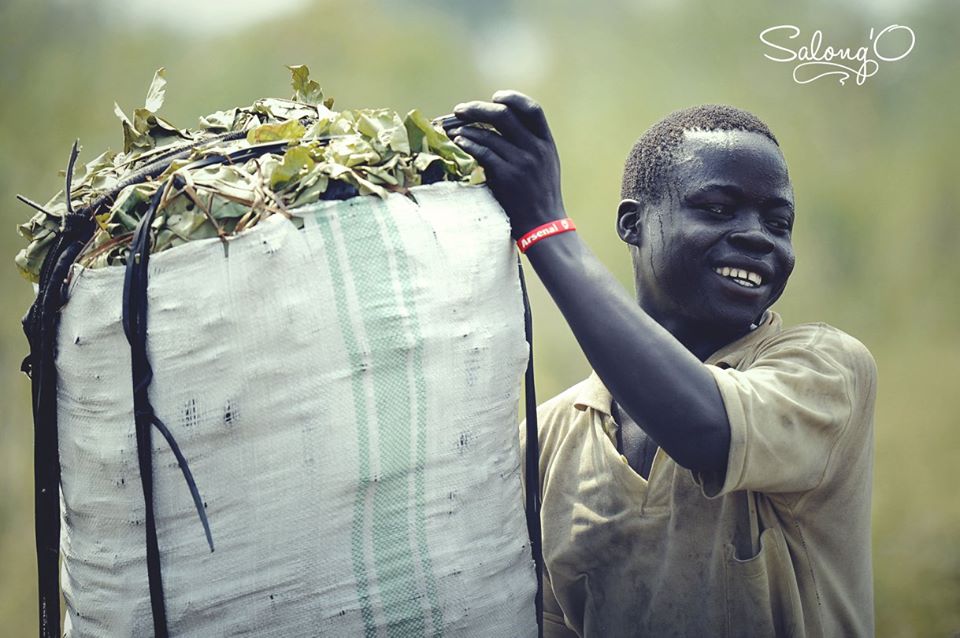
A simple Google search reveals that an estimated 1.2 billion people living in nations of Sub-Saharan Africa (90% of the population), Ugandans inclusive, depend on wood fuel for cooking (firewood and charcoal).
Furthermore, the search reveals that in Asia, populace countries, such as India and China, “account for a massive share of total global fuelwood consumption.”
Do countries in Sub-Saharan Africa have in place a ban on wood fuel usage? Yes, some of them do.
For example, Rwanda reportedly banned use and supply of charcoal in its Capital City, Kigali.
In Uganda, through Executive Order No. 3 of 2023, President Museveni decreed a ban on charcoal for specific regions of the country, as follows:
“I have now decided to ban all charcoal burning and trade in Northern and North East Uganda (Karamoja, Teso, Lango, Acholi and West Nile). I hereby ban the cutting of trees for charcoal burning. However, without greed, charcoal burning could assist ranching. In symbiotic arrangements, farmers in the West engage charcoal burners to clear the thickets and unwanted trees, such as accacia hohii and convert the cut trees into charcoal that they sell. You end up with well cleared farms that retain the good shade trees such as emisisa (albezia); which is also nitrogen fixing, eminyinya, emikoma, etc. However, under the ban I have imposed, it must only be the Minister of Environment on the recommendation of the RDC, that will authorize that symbiotic charcoal burning in that area I have indicated. (Extracts from Executive Order No. 3 of 2023”
Cutting off supply – the Uganda Ban
It would appear, the Uganda Police force, has interpreted the Executive Order to mean a blanket bun on all charcoal burning.
Publishing on its website that the order “bans charcoal burning and trade in West Nile, Northern Uganda, Karamoja and Teso sub-Region (source the Uganda Police Force)”
Not quite so.
Within the Executive Order is encoded a means in which charcoal burning and trade are permitted.
Specifically, when it achieves “symbiotic arrangements” and when it is approved by the Minister of Environment on the recommendation of the Resident District Commissioner (RDC).
It is valid to deduce from the Executive Order, a good kind of charcoal trade and a bad kind of charcoal trade. It is the latter that is banned.
De facto, if I intentionally devote efforts to establish a charcoal business, in which, for example, I grow trees for the purpose of charcoal burning, technically it would be the good kind, which is not banned.
It is doable within a decade.
It is possible to establish a self-sustaining charcoal business that is based on growing own trees, such as acacia trees, mango trees, lemon trees, etc., which when their stems are cut off, they re-grow.
I dare insist that this is indeed among the wealth of African knowledge systems, establishing regenerative sources of wood fuel. Knowledge systems which have been interrupted and undermined in the quest of Eurocentric development models.
Enforcement of the Executive Order which focuses on stopping and cutting off supply of the bad charcoal trade has significant support, for it is inherently destructive to the environment and livelihoods of local populations.
In Acholi, for example, those involved in the Shea value chain welcome it with open arms.
The uproar against the resent pronouncement by the Uganda Police Force which seem oblivious of the good kind of charcoal trade, is to be expected. Not only is it inconsistent with the Executive Order, it is unrealistic.
It is foolhardy to expect to be able to cut off supply of fuel that 90% of the population depends for ensuring and assuring their food and nutrition.
Cutting of demand – the Rwanda Ban
This makes sense.
First, it is limited to the Capital City, in which the Government of Rwanda is able to enforce the ban.
Second, it is feasible that alternative sources to wood fuel are readily available in Kigali.
Third, it is valid to assume that people who live in Kigali are able to afford such alternative sources of fuel, such as liquified petroleum gas (LPG).
Argo, Rwanda appreciates that a total ban on wood fuel, including in rural areas, is unrealistic. It is more realistic to enable switching to alternative fuel – including provision of the relevant infrastructure and supply of alternative fuels.
This is as opposed to banning the supply. Destroy the demand and the supply will automatically stop.







Let’s Chat…