
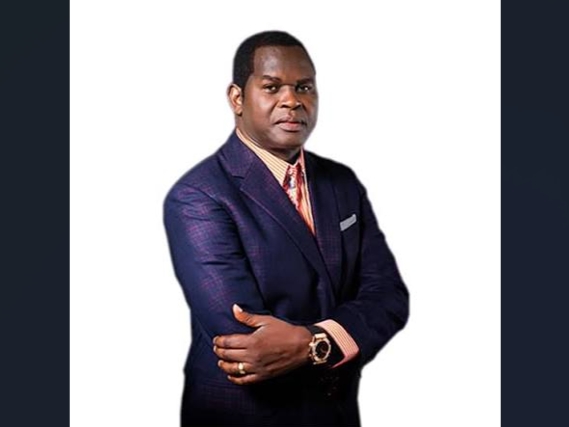
 “The Bible says ‘bring the 10% to the house of God, so there may be food,’” he said, adding that he had been able to build the magnificent Cathedral and completed many other projects through the tithe. Pastor Robert Kayanja is quoted by CHIMPREPORTS in a story titled: “Pastor Kayanja wants Gov’t to start paying Tithe to church.”
Pentecostal Evangelist Robert Kayanja is reported to have demanded a 10 percent cut from Uganda’s national budget to be allocated to the house of God.
Aka the houses of gods, as some choose to describe them, in the context of Uganda.
Indeed, many ‘non-traditional houses of God’ are controlled by individuals, similar in the manner that private family businesses are managed.
Such ‘non-traditional houses of God’ likely do not have full organized institutional structures, for example, such as the Vatican, in case of Catholics, complete with checks and balances.
A more apt description, therefore, is that some so-called ‘modern houses of God’ are houses of self-proclaimed men and women of GAD (spelling how it sounds when said Ugandan owners of the houses say it).
The demand from Kayanja has provoked outrage.
But I think Uganda is missing an opportunity here. You know how the teachings apparently say that God works in mysterious ways.
Or that God’s answers to one’s prayers may not be exactly what one asks for, but one must accept God’s answer for God knows better.
Opportunity Knocks
Kayanja’s demand has revealed that a lot of taxable income is not being taxed.
His followers tithed to him sufficient funds to build a magnificent cathedral and more.
Was this money that was tithed considered as income for Kayanja’s church and therefore taxed?
Was it money that had already been taxed when his followers gave it to him?
Did Uganda Revenue Authority investigate?
But we need not get into all of that. Let us go forward.
It is a general understanding that tithing is a very personal thing, which is based on one giving some of one’s INCOME towards supporting those that are doing the work of God.
Kayanja’s demand is the first I hear of tithe on the basis of an abstract BUDGET.
In some countries in which Eurocentric religiousness is more evolved, as some have argued, the State assists the church to collect tithe in form of tax – Church Tax.
According to Wikipedia, Austria, Croatia, Denmark, Finland, Germany, Iceland, Italy and Sweden do so, charge an collect Church Tax.
In all of these cases, Church Tax is collected from persons who proclaim that they are of a particular congregation. Which congregation or Church for this matter is recognized as such by the State.
The State then gives the Church the taxes that its members pay. And because this is being done by the State, it is clear that the income that the Churches receive from their members is taxed income.
Furthermore, even when the state takes a share of the overall Government income and gives it to the Church, it does so on the basis of the numeric membership or the congregation of the Church.
This is a great opportunity for the Government of Uganda to explore Church Tax, starting with the members of Kayanja’s church.







Let’s Chat…