It is Machiavellian for official government documents and discourse to refer to our smallholder farmers, the majority of Ugandans, as peasants and or as subsistence farmers.
This mis-characterization of the majority of Ugandans is the basis of flawed policy that is sustaining a vicious cycle of poverty in our nation.
Truth is the majority of us are net buyers of food. As in we buy more food than we sell; meaning that we produce and sell and then buy to eat.
“In the past, people farmed ecoroko (peas) and imare (cowpeas), which would last for years, but now people no longer farm ecoroko and imare in those volumes for home consumption. Now people farm, harvest and sell and then they go and buy things like cabbage. But old women of the past, their imare were kept in the granary, their ecoroko was kept in the granary; but these days, as soon as problems come, people are in a hurry to sell imare and ecoroko quickly in order to get help. So hunger from having no food stored causes one to buy cabbage for food. Imare and ecoroko are like pocket money these days. People can sell them anytime, in order to get money – money for school fees, change of diet, illness – medical bills. Milk is also just sold these days. Where is it in the individual homes these days? Some of us even spend a year without tasting milk. Even sour milk you just have to buy at Shs. 300.” Iteso Focus Group Discussion, 2016
In the neoliberal economic order that our nation-sate has embraced, we must of necessity fend for ourselves. And to do so, we need to have cash.
We need cash for paying for social services, such as school fees and health care services. And we need cash to buy food.
“We buy cabbage because the Bagisu bring it and sell it to us, we don’t grow it. They bring it from Mbale. We just buy it. Hunger has caused us to eat cabbage. When we experience long dry spells we cannot grow food, so we find some money to buy cabbage. When there is a long dry spell eboo (cowpea leaves) disappear. We also eat tomatoes that are imported, we just buy them. Even though we have been mostly eating imported eggplants from Bugisu we have also started growing eggplants. Those who grow eggplants now also sell to us.” Iteso Focus Group Discussion, 2016
Bugisu is in the Eastern Region. From the East to the North-East and throughout the country, smallholder farmers are producing for the market – the local, the regional and also for the global.
Majority farming household, I dare say nearly all households in Uganda, are engaged in commercial agriculture. We proactively grow and sell food. We grow and sell food intra-community and inter-community.
Unfortunately, because of the mis-characterization of the famers that feed our nation as subsistence farmers, policy and official government documents contain mal prescriptions for farming households.
Mal prescriptions that:
- Unduly focus on destroying indigenous production knowledge systems; and promoted adoption of inappropriate exogenous knowledge systems.
- Are silent on the real issues that need addressing such as farm-gate prices, protection of our produce from imported cheap subsidized produce.
An urgent re-think is needed. Duty bearers urgently need to go back to the drawing table, so to speak.
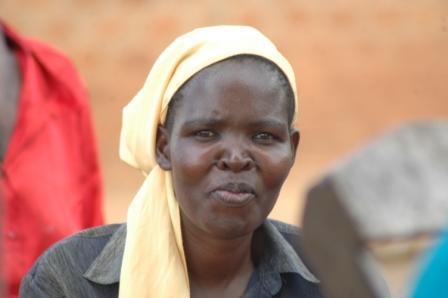
Profiled photo @ successful female commercial farmer in Pallisa in Eastern Uganda, who is mis-characterized as a subsistence farmer and a peasant.






Let’s Chat…