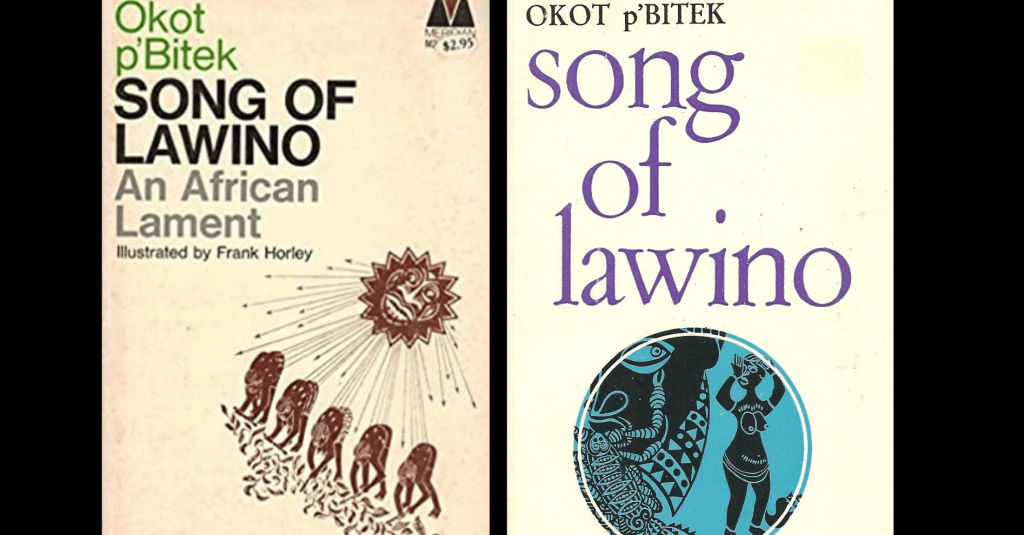


How I wish I had experienced a performance of Song of Lawino in its original form, in the language of the Acoli nation, in which it is set.
How I wish I had experienced a performance of Song of Lawino in the natural setting of the homeland in which it is set; and stage set customized accordingly.
How I wish I had seen and heard Lawino, the lead protagonist, deliver some of my favorite lines in the poem, such as, for example:
“I do not like dusting myself with powder: The thing is good on pink skin / Because it is already pale, / But when a black woman has used it / She looks as if she has dysentery.”
A powerful and precise commentary of the warped mindsets now prevailing in our motherland; moreover, stronger than ever now, post colonization.
Among sustaining legacies of colonialism in our motherland is the idea that the marker for ‘development’ is to look and act like our colonizer did or does.
I am saddened that many do not go back in time to trace the root causes of many of our problems, particularly so in governance, to the ethnocide of our cultures.
The third ranked position in our national governance structure is the Speaker of Parliament. Its holder is the second in line to take over the presidency should something happen to the sitting president and the vice-president is unable to.
The culture-normal for Acoli, and I dare say all African cultures, is that a person who holds such a position should be a good orator; and one who is not afraid of holding their own in a robust debate session.
And so, when I saw a clip doing rounds on TikTok, in which the Speaker seemingly shut down the debate of a significant matter, I was perturbed.
The clip shows Hon. Masaba, Member of Parliament representing Mbale Industrial City Division, a trained Economist, submit thus:
“We are CONFIRMING to the public that as Parliament we pass laws without understanding them. Without looking at the terms and conditions.”
According to Hon. Masaba, he was referring to a 17-page Minister’s submission and an agreement that could be 300 pages, which members had just received on their I-pads shortly before the session. And had obviously not read. He pleaded:
“Mr. Speaker, I am certain we are passing this loan without looking at the agreement … Let it be on record that the 12th Parliament has started from where the 11th Parliament was – passing laws without looking at (and debating) the various agreements first.”

And the Speaker, all decked in a blonde wig, powered through and I do believe got the loan approved, without meaningful debate; and not in full compliance with parliamentary rules.
The sad story of Uganda rejoining the league of heavily indebted poor countries is for another day.
For now, I wonder what Lawino would have said of the Speaker’s blond wig. Seriously, why is it that we continue this absurdity. Other African countries, including our neighbors, Kenya, have gotten rid of it.
The original reason why the blonde wig was worn as a symbol, is because blonde wigs were fashionable during the reign of King Charles II (1660-1685). CLICK HERE to read more.
Fellow Ugandans, we are now in the reign of Charles III, why or why do our minds remain colonized for centuries?
Not only is it outdated, this legacy of colonialism is costly to acquire and to maintain. Yes, the cost to buy and to maintain one blonde wig that our Speakers and certain judicial officers wear is in millions of shillings.
And honestly, the aesthetics of it are in the league of a dark-skinned woman with white powder on her face, “she looks as if she has dysentery.”
I have digressed. Back to the point.
Song of Lawino is a powerful critique of its time and which remains, perhaps, the more relevant today.
How I wish I had been in the room with p’Bitek, now rested, as he delivered a masterclass on his ground breaking writing style that honors African oral traditions and culture, while he recites Song of Lawino.






Let’s Chat…