The screaming headline, “Top 10 African countries with the highest number of hungry people,” caught my attention a couple of days ago. I clicked on the link to read more of Chinedu Okafor’s analysis published online on “Business Insider Africa.”
As I read, I noticed that those top ten countries, here listed in order of number of hungry people: 1. Nigeria, 2. Democratic Republic of Congo, 3. Ethiopia, 4. South Sudan, 5. Malawi, 6. Chad, 7. Somalia, 8. Mozambique, 9. Zimbabwe and 10. Burkina Faso; with a combined total of 98.7 million hungry people; at the same time have a combined total of 512.3 million satiated people, and presumably food secure.
As I read, I noticed, as well, that among the ten top countries listed as those with the highest number of hungry people in Africa are countries which have large populations. Countries such as Nigeria, Ethiopia and Democratic Republic of Congo. Those countries having a large number of hungry people could be explained by the fact that they have large populations.
And I thought, perhaps, a more useful comparative ranking of the top ten countries with the highest number of hungry people, as ranked by Okafor, might be by percentage of their respective populations that are food poor and hungry. Ranked in this way, the positioning changes as follows (in order of countries with least proportion of hungry people):
- 90.5% (31.6 million) of Mozambique’s 34.9 million people who are satiated; 9.5% (3.3 million) hungry.
- 88.7% (21.1 million) of Burkina Faso’s 23.8 million people who are satiated; 11.3% (2.7 million) hungry.
- 87.8% (114.2 million) of Ethiopia’s 130 million people who are satiated; 12.2% (15.8 million) hungry.
- 86.1% (197.2 million) of Nigeria’s 229 million people who are satiated; 13.9 (31.8 million) hungry.
- 82.4% (14 million) of Zimbabwe’s 17 million people who are satiated; 17.6% (3 million) hungry.
- 81.8% (15.3 million) of Somalia’s 18.7 million people are satiated; 18.2% (3.4 million) are hungry.
- 79.8% (15 million) of Chad’s 18.8 million people who are satiated; 20.2% (3.8 million) hungry.
- 79.5% (17.1 million) of Malawi’s 21.5 million people who are satiated; 20.5% (4.4 million) hungry.
- 77.9% (82.6 million) of Democratic Republic of Congo’s 106 million people who are satiated; 22.1% (23.4 million) hungry.
- 37.2% (4.2 million) of South Sudan’s 11.3 million people who are satiated; 62.8% hungry.
In fact, it is only South Sudan that has a larger proportion of hungry people than it has satiated people; while the remaining nine each have a proportion of over 77% of their respective populations made up of satiated people.
In presenting this analysis in a positive tone, I am in no way attempting to underrate and understate the urgent need for all countries in Africa to attain 100% satiated populations. It is my conviction that instead of framing the issue from a negative perspective and framing it in a positive perspective, we all may be able to better appreciate that there are lessons to be learned from the successes.
Case in point, what is Mozambique doing right so that 90.5% of its people are satiated and food secure? How can this be applied by Mozambique to the remaining 9.5% of its people so that they too can be satiated? What can South Sudan learn from Mozambique’s success so as to tackle its challenge of 62.8% hungry people?
Indeed, I subscribe to Jamaine Krige’s call that “Reclaiming the African Narrative through an African Lens” is long overdue. Time is now. And it is in that spirit I have authored this post.
***
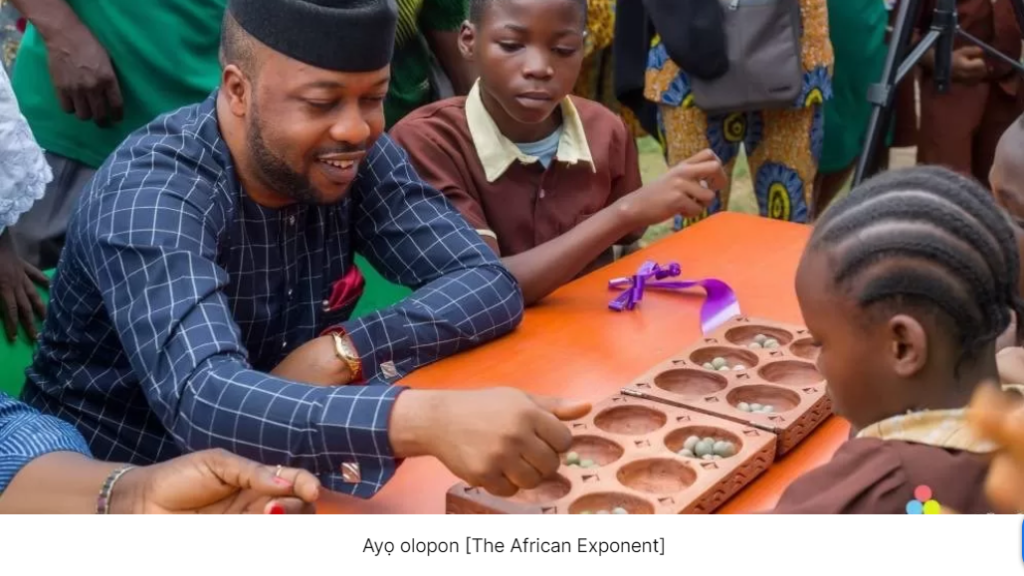
Profiled photo @ African Folder – Ayo Olopan as it is called in Nigeria, Endodoi in Tanzania and Kenya and Omweso in Uganda is a game “that calls for a lot of mental agility and mathematical prowess” in “10 African Games You Didn’t Know Were Invented By Africans”






Let’s Chat…