

As I grow older, increasingly, I yearn for tit bits of information about our African cultures prior to the transatlantic slave trade and the colonial period.
“The transatlantic slave trade was an oceanic trade in African men, women, and children which lasted from the mid-sixteenth century until the 1860s. European traders loaded African captives at dozens of points on the African coast, from Senegambia to Angola and round the Cape to Mozambique. The great majority of captives were collected from West and Central Africa and from Angola.” Source: Slavery and Remembrance.
My appreciation of the impact of slave trade on Africans and our cultures is significantly shaped by the multiple award winning mini television series, “Roots”, and its main character “Kunta Kinte.”
You can imagine, I watched the series, as a child, in the 1980s; but I still remember the story. Perhaps, it is time for me to re-watch it. Mental note to self: “Ask for it next time you are buying videos”. And perhaps, it is time also to read the book, “Roots,” by Alex Haley, on which the series is based.
The violent manner of the transatlantic slave trade interrupted and destroyed African civilizations – an ethnocide, civilizations and cultures destroyed, no doubt. I feel, though, that the ethnocide is much less talked and written about. The genocide, the African people who died and where uprooted from their homelands, because of the transatlantic slave trade, is perhaps the more written and talked about, as compared to the ethnocide.
And then there was the colonial period in which exogenous cultures took the good from our civilizations and branded them theirs and that which they did not understand they demonized. To the extent that many Africans have internalized an inferiority complex and want to distance themselves from their own African cultures and to be associated with the colonizer’s cultures.
Accepting the fallacy, the branding of African cultures as inherently backward and demonic; and of Anglo-Saxon centered cultures as progressive and pure. Sadly the fallacy lives on and determines Africa today. Thin about it, an absolute fallacy is the basis on which the continent’s self-determination and agency are derailed and dis-empowered.
And so, for me, any bit of information that helps to debunk such factoids I yearn for – for my own learning and to popularize so as to contribute to the restoration of pride and dignity of others, particularly people of African descent.
“Though we are of different tribes and tongues, remember we are the same people! (Mandika Elder, Roots)
I wonder, case in point, for example, if the Rwanda ‘revolution’ of 1961 would have ever taken place if Africa had not been colonized. A revolution that ousted the Rwanda monarchy. Would Africa be the more stable if our monarchies were not ousted and erased so that for many of our countries, the King of England became our sovereign? Continuing on today, under the smoke screen of the commonwealth.
I remember that there were African civilizations, monarchies and all, before the slave trade and colonialism.
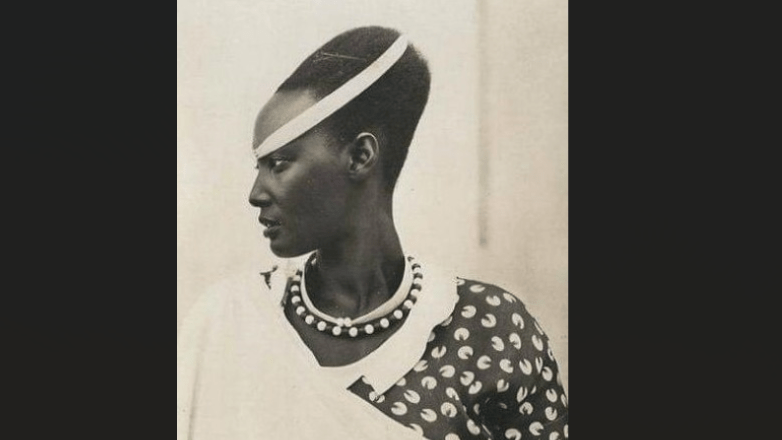
Profiled photo: Queen Dowager Rosalie Gicanda, wife of Rwandan King Mutara III Rudahigwa (Source: X – Typical African @Joe_Bassey).




 the Humanist view
Let’s Chat…