As we get closer to the 2016 elections the lukewarm out-cry against vote buying gets louder and even more superficial. Those who are allegedly forking out the cash to buy votes are crying out loud, perhaps even louder than those who are selling their votes, but nevertheless buyers and sellers are all crying foul. Some criers are more genuine than others.
As early as way back as 2011, Hon. Engineer Winnie Byanyima, one of the most powerful women politicians that Uganda has ever had, is quoted as having implored voters not to vote for politicians who dish out money for buying votes for such politicians are corrupt. More recently Hon. Kahinda Otafiire in 2014 is quoted as having said that vote buying in Uganda makes him sad.
How ironic that mass disempowerment of Ugandans has happened during President Museveni’s watch. Moreover, he is credited for creating a home-grown participatory democratic system. The RC/LC system, which initially ensured genuine grassroots political participation. The unhealthy relationship between ordinary Ugandans and our politicians (local councillors, members of parliament and the president), vote buying, illustrates my point.
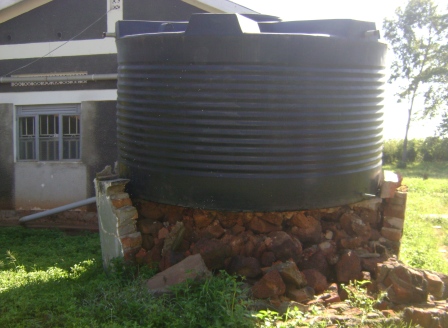
When Ugandan politicians are electioneering – as they are actively doing in 2015 in preparation for the 2016 presidential and parliamentary elections – they give out basic food items such as salt and sugar, household materials such as cooking utensils; ‘sponsor’ community projects such as sinking boreholes; and are active in social activities such as attending burials and paying burial fees – feeding mourners.
The constituents, the voters, the majority of whom are poor, are so happy and grateful to the ‘big men’ for providing for them that they do not stop to question why in the first place they were not able themselves to purchase their own basic food items, to pay for sinking of boreholes and to feed mourners at their burial ceremonies.
They do not stop to question how and where the ‘big men’ got the ‘personal’ money that they are spending on them. Often, as hinted by Byanyima, such politicians’ ‘personal’ money is but a small fraction of public funds that have been diverted and stolen. The bulk of the stolen money is often likely retained for the thieves’ personal use; in other words corruption.
When the ‘do-gooder-vote-buying-big-men’ are elected into office, they do not regard us, their constituents, as subjects with whom to engage with and to serve; for after all they have bought us, we are objects for their attention – they are our ‘helpers’. Hence, they do not feel accountable to us and instead they expect us to be grateful for whatever crumbs they dish out to us.
This is perhaps one of the reasons why there isn’t mass public outcry against a violation of Uganda’s Constitution for over a decade – village and parish local council elections are supposed to be held every five years but have not been held since 2001.
Our senses are blocked by the ‘charity’ of our politicians, of all parties by the way, which acts as an anaesthetic which blocks the sensation of pain (sometimes putting one to sleep) usually in order to allow doctors to cut off or stitch up body parts. Once the anaesthetic wears off the pain normally returns.
Similarly, our politicians’ ‘charity’ distracts us from the true causes of our suffering, since in the short-term, during the duration of election campaigns, they will give us ‘handouts’ to relieve our suffering, and we do not take the time to address the root causes of our suffering.
Once the election is held, the ‘charity’ stops and our suffering returns and in some cases even worse than before.
Also published in Daily Monitor on 24th January 2015




 the Humanist view
Leave a reply to John Magezi Cancel reply