
The Messiah Comes
In the late 1980s and early 1990s, President Museveni was the ‘it-leader’,
He was ‘our man’ and he was absolutely adored by the press, which predominantly told a single story of him and his leadership style.
In 1986, when President Museveni took power, he promised an administration that was “not a mere change of guards but a fundamental change.” A promise that was received with jubilation and great hope for the future.
It was believed to be a new day for Uganda – the messianic leader had arrived.
It is on record that President Museveni in 1986 pledged to the people of Uganda that he and his administration would desist from indulging in a lavish life style.
Historical archives are awash with the famous promise that President Museveni made in 1986 that he would not be like ‘problem-leaders’ of Africa who overstay in power.
He promised that he would stay in power for no more than 10 years.
During the 1990s, President Museveni’s popularity indeed soared high.
He was recognised by world leaders as among the new generation of African leaders.
He was among Africa’s new leaders who were perceived and celebrated in the popular press as being committed to democracy and economic reform for the good of their respective populations.
He was heralded alongside other African leaders, such as:
- President Paul Kagame of Rwanda
- President Meles Zenawi of Ethiopia
- President Isaias Afewerki of Eritrea
- President Jerry Rawlings of Ghana
- President Joaquim Chissano of Mozambique
- President Thambo Mbeki of South Africa.
President Museveni’s popularity seemingly was at its highest in 1996, when 75.5% of Uganda’s voting electorate democratically elected him and endorsed him as the President of Uganda, according to official declared results.
How could they not vote for him. The smoke-screen of the Museveni single story that the media had popularized was still thick in the air. Ugandans still believed, for example, that the essence of his 1986 decrees still held true.
His decrees were popularized by the media as being revolutionary and exciting.
Nearly 30 years later, the jury on President Museveni’s messianic rule-by-decree leadership is long back in.
The Plastic Mugs and Locally Made Furniture Decree
Decrees such as the one in which he ordered that plastic mugs and furniture that are made in Uganda should be the ones used in State House.
Specifically, that the furniture to be used in State House would be made by poor active Ugandans who were residing and working in slum areas, such as in Bwaise.
Seemingly, redirecting resources back to the majority.
It is hardworking Ugandans who were getting a raw deal from unfair global trading practices, he diagnosed at the time; at it is they his decrees targeted to benefit, it was touted.
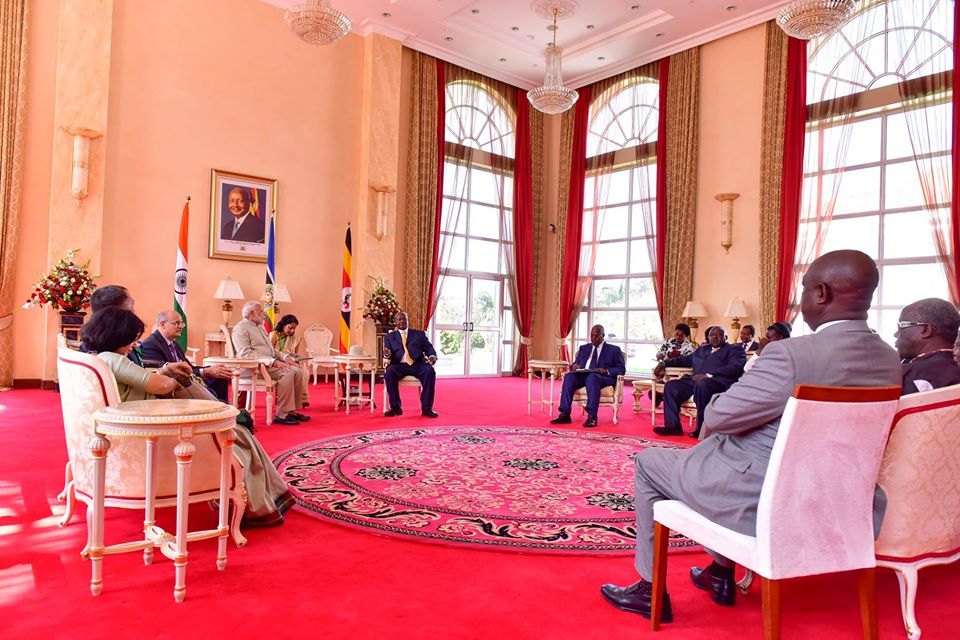 Photo credit: State House Uganda
Photos of the interior of State House current erase any doubts that the furniture in State House is not made in Bwaise.
If at all there are any plastic cups in State House, judging from imagery in the popular press, it is doubtful that the first family and their guests use such cups.
It is plausible that only the lowliest state house workers use plastic cups, while at State House, if at all.
Magufuli and Amin Comparisons
The son of Uganda’s former President, Idi Amin, on social media described President Magufuli’s ‘bulldozer-approach’ in Tanzania as being:
“The exact hands-on approach that Amin used to ensure that government was providing expected services efficiently.” Hussein Lumumba Amin
And guess what? The opinion that President Amin was a better president than President Museveni is reportedly gaining traction in the popular press.
Some analyst say it is because sections of Uganda’s population are getting increasingly disgruntled and heart-broken by President Museveni’s broken promises.






Let’s Chat…