
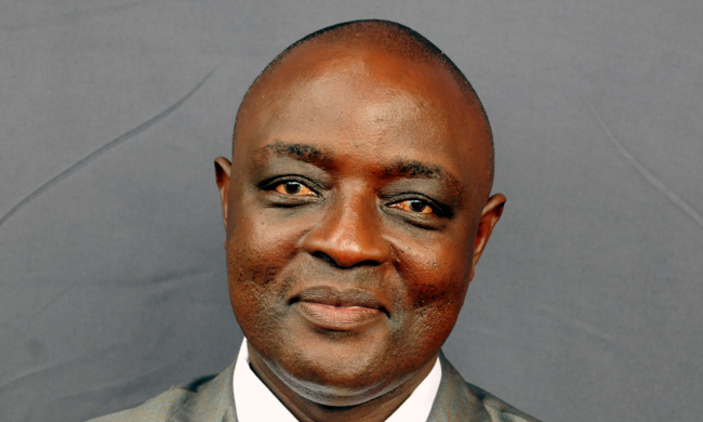
These remarks were made by Hon. Vincent Bamulangaki Ssempijja on 29th August 2016 during the Uganda Joint Agricultural Sector Annual Review (JASAR) that was held at Speke Resort Munyonyo in Kampala in Uganda. One of the events at the JASAR was a press conference among which the panellists were the Minister of Ministry of Agriculture Animal Industries and Fisheries (MAAIF), Hon. Syda Bumba, other senior government officials – including heads of directorates within MAAIF, and Mr. Charles Owach of Food and Agriculture Organisation of the United Nations (FAO Uganda) who represented Government of Uganda (GOU) ‘Development Partners’.
The question is: how shall we in agriculture achieve the target of contributing four billion dollars to Uganda’s economy? All areas in agriculture have the potential to create jobs.
Fisheries if not mismanaged and managed well, can employ so many people. We are going to emphasise aquaculture that is to do with fish farming and farming of other things that are farmed in water, instead of allowing our lakes to go to waste. Aquaculture will create tens of thousands of jobs.
We are going to increase production to 20 million bags of coffee from three million bags. This has an element to create jobs. You have got to plant it, you have to look after it, you have to pick it, you have to dry it, you have to process it, you have to transport it, you have to pack it, you have to export it, all these are jobs. So if we talk about increasing the volumes, then we are also increasing jobs.
We are going to use fertilisers. In Uganda, since we had good soils originally, people did not think about fertilisers but now we know we need to use fertilisers. Even with the current tree population of coffee, if we used fertilisers we can multiply the volumes, the productivity of coffee by three.
Cotton, we are going to emphasise not only production of cotton, but also value addition. We need to increase the production of cotton.
We are interested in people with larger chunks of land to go into these kinds of crops. Cotton is one of them, maize is one of them, and tobacco is one of them. We want to create partnerships with people who have big areas of land. Some of them are keeping the land as security – one day I will fall short of money and I will sell it. But now we want them to use this land.
Government of Uganda is planning to mechanise. With large chunks of land certainly you have to use mechanisation. And that is where we are going to put emphasis. Once people with large areas of land come into agriculture and once they partner with government and we use mechanisation then we are there. Only 500 people with 500 acres each if they decided to go into maize, they will produce enough maize for this country. We have already done it on paper and it is possible.
Research is there. Part of research is to produce new products – not only animals, but even crops.
Now the youth want to get quick money, we think they may be involved in horticulture and our researchers are working on those horticultural crops that can easily be undertaken by youth and women to get money within 90 days.
We want to organise the farmers, the youth who are going into horticulture to connect them to the market – not only the local markets but also those lucrative external markets, so that they produce for the market. So, all these will be jobs.
We shall be getting more money from exports. It is very easy to target export markets, once you organise the farmers. We want farmers to be organised around enterprises so that one day, each one of us here will know that if you want horticulture it comes from Kayunga and we can load 5 tons 20 tons every Monday.
We are going to organise our farmers to consciously produce for the market. We are going to add on volumes. We are going to meet the quality standards of the international markets, thereby increasing income, revenue for the country but also incomes for the people that we work for.
We have 10 inspectors so far. We want to add on the number of inspectors.
We are working with exporters. We are going to register all farmers that produce horticulture for export. That is vegetables and fruits for exports. Before December, you will see files of our lists of farmers who are producing for the export market.
Every exporter we attach to these groups (groups of farmers) who is going to buy from them must also have own extension services. Exporters are going to be required to recruit and have extension service providers in order to get a license from us.
We want to have a system that is coordinated and well planned and controlled. In view of diseases and pests; and these markets out there that are complaining about the poisonous drugs that we are using here, we really need to organise ourselves.
The Minister’s remarks were in response to the following three questions which journalists asked the panellists:
- Minister in your speech you mentioned that you are looking at agriculture contributing four billion dollars. You mention a list of crops, am wondering, you did not say what you are going to do. Are you going to provide seeds?
- I would like the Minister to give me specific interventions in terms of innovations that he thinks can mitigate the scarcity of jobs in this country at present.
- You mentioned the four billion dollars, but there is a concern right now about horticultural products. That the Ministry of Agriculture has only two inspectors and the 50 plus exporters are not having their products verified in a timely manner. What is the position of the Ministry ahead of the European Union Review?




 the Humanist view
Leave a reply to mukisa Edward Cancel reply