

Case of Operation Wealth Creation
“Operation Wealth Creation (OWC) is doing extremely well – the volume of inputs. The impact is enormous irrespective of the fact that the extension is not good, the impact is there.” Budget Monitoring and Accountability Unit (BMAU)
BMAU Findings
According to BMAU the basis – the premise – on which it arrived at its conclusion is as follows:
BMAU sampled 61 farmers.
The 61 farmers it sampled received all the inputs that were earmarked to them.
The 61 farmers it sampled received all the value addition equipment.
There is abrupt delivery of OWC inputs – some of them left at police stations for collection in the following days.
There were cases of no holding grounds for OWC delivered animals – grounds where the animals would have been kept and treated prior to distribution to beneficiaries.
OWC inputs were not delivered on plan – therefore, farmers were not ready. For example, a farmer is picked to grow mangoes when said farmer has never grown mangoes, but just because OWC has brought mangoes.
In Maracha District, BMAU found that 200 kilograms of OWC maize was delivered late, farmers could not pick it at the time the maize was delivered and so by the time the famers came for the seed it was too late.
Items received by 27 (44 percent) of sampled farmers had issues of low survival rates; animal mortality; and non-functional equipment.
Farmers, in some instances, took OWC seed, washed it and ate it as food.
There are so many OWC facilities, like the maize mill in Buikwe, which are not functional. Another example, in Isingiro, an OWC milk-cooler which had been there for one year and it was not functional.
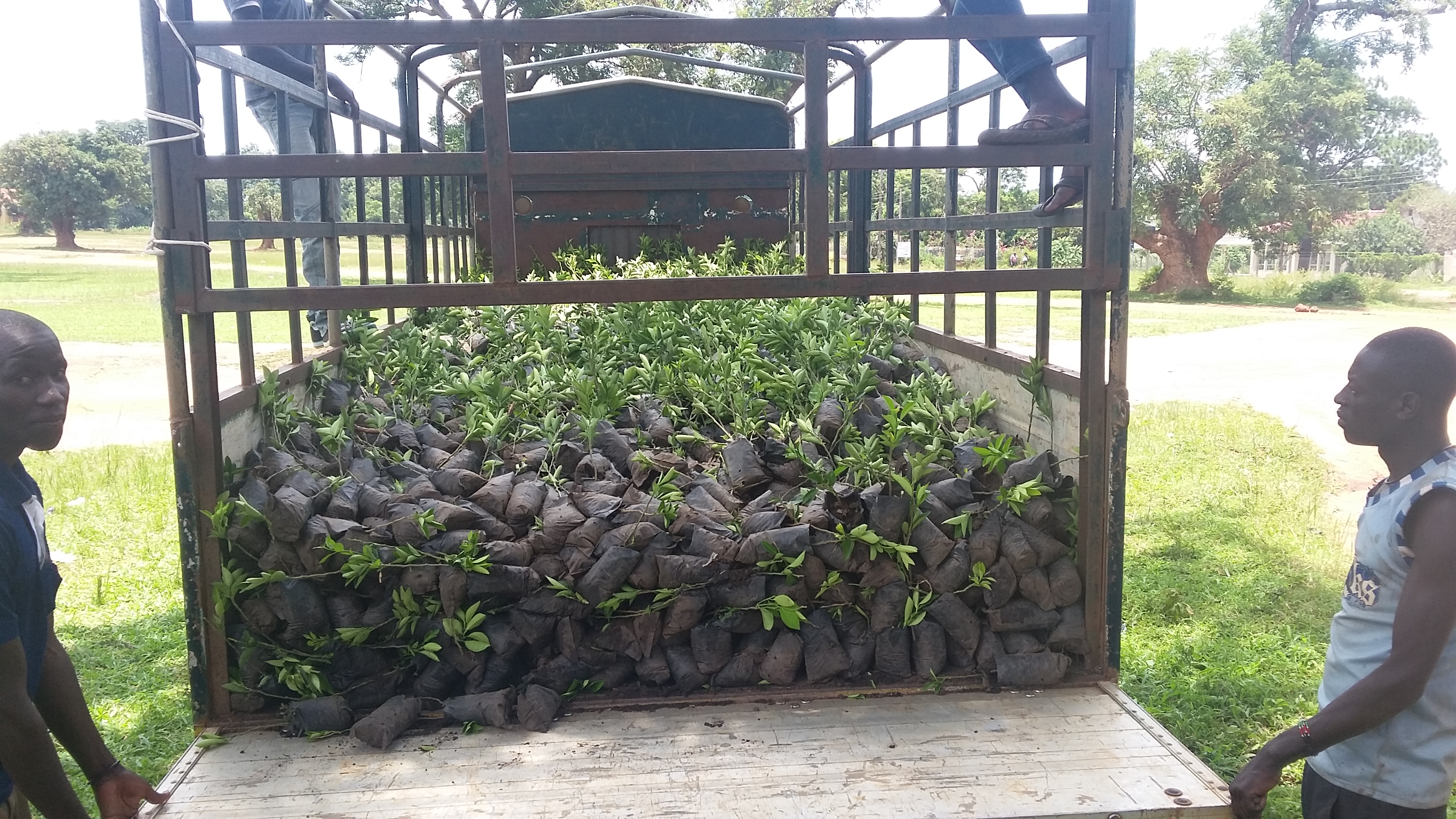 Fruit tree seedlings procured by Operation Wealth Creation and delivered for free distribution in Lira, Lango Sub-Region, Northern Uganda.
Output Versus Impact
An output is “the act of producing something, the amount of something that is produced or the process in which something is delivered.”
It appears the premise on which BMAU based its conclusion that “the impact is enormous” of OWC is mostly immediate output indicators and not impact indicators.
BMAU simply described OWC recipients and the manner in which OWC made deliveries – which is consistent with the definition of outputs.
Utilizing deductive logic, therefore, it is illogical to accept the conclusion of the BMAU of “the enormous impact” of OWC on the basis of its premises.
This is because it does not always automatically follow that if inputs are procured, delivered and farmers have received them, those inputs procured, delivered and received will necessarily cause enormous impact.
Ad Hominem Fallacy: It is valid to infer that BMAU obfuscated its conclusion, which when closely analyzed reveals it is not supported by the facts and deductive logic. Raising suspicion that the focus was to make OWC look good, irrespective and at all cost, so to speak.
BMAU is of the Ministry of Finance, Planning and Economic Development (MoFPED) and shared its conclusion on the performance of OWC. During the Joint Agriculture Sector Annual Review (JASAR) 2016.









Let’s Chat…