
Virtual Socialization
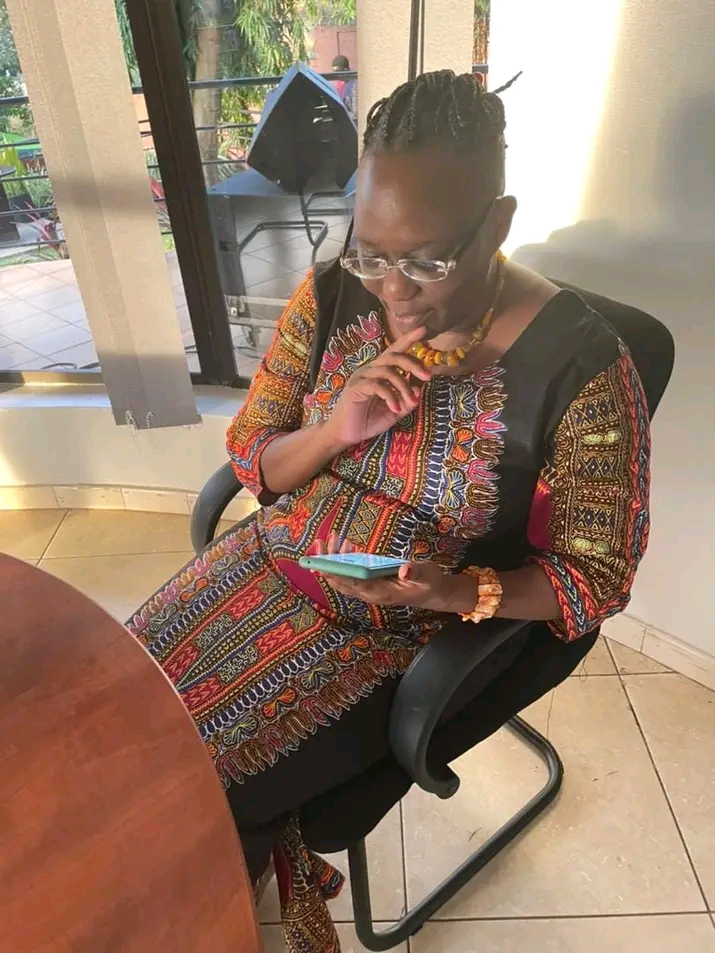 Ms. Owaraga Norah at KAS Kampala Offices
Digital technology has changed our socialization processes.
There is no need for frequent physical visits with grandma. We can have virtual ones through the internet.
At a touch of a button grandma is up-dated on the growth of her grandchild with elaborate photos, sometimes sent to her daily.
In some cases, that is as much participation that grandma will have in nurturing her grandchild.
It is not uncommon for Uganda’s elites to maintain social networks with relatives and friends digitally.
Our social practices have changed.
The only reason her son used to visit his mother was to bring money, but now he does not have to, he saves money on fuel and at a touch of a bottom his mother can receive money through mobile money.
The concept of friend has taken on a whole new meaning, with many having Facebook friends in thousands that they have never met.
Forget those days when the living room was the place for a family to spend time together. Not anymore.
A family may be physically together in the living room, but:
- Mum will be on her Ipad polishing her speech
- Dad on his laptop finishing off some work that he brought home
- Junior’s ears are plugged in with earphones from his Iphone and he is busy texting with his Facebook friends.
- To get Junior’s attention mum sends him a Google text message: “Junior it is your bedtime”.
Virtual Language and Vocabulary
 Golola Moses, the famous kickboxer, image source @ The Investigator
Children of the digital era are ‘dot.com’.
They don’t speak Ateso, my mother tongue, the language of the fifth largest first nation of Uganda, Iteso. Nor any other of the 50 plus first nations of Uganda.
The language of ‘dot-com’ children would have earned them serious punishment during colonial Uganda.
A ‘dot.com’ child shortens English words by using numbers with English letters to form words. “For” may be reduced to just “4” or “see” and “sea” to “C” or “to” and “too” to “2”, or “you” to just “u”, and there is more.
A text message from a ‘dot.com’ child might read: “Luk 4wad 2 c u”. Colonial teachers of English in Africa must be turning in their graves.
Shortening words and spelling words as they sound is done in order to be able to fit the message within one text message and in order not to type much.
Words have taken on a whole new meaning with the advent of digital technology. Apple, Orange, Mango, are now digital service providers in addition to being fruits.
‘OMG’ as facebookers would message or perhaps ‘LOL’.
If you do not understand what ‘OMG’ and ‘LOL’ stand for, certainly your knowledge of the digital migration debate is insufficient.
You might be like a Ugandan members of parliament (MP) who when asked for an email address, the MP asked what an email address is.
Uganda’s famous sportsman, Moses Goloola of Uganda’s kickboxing fame (he is the only Ugandan kick boxer that I know), came to fame partly due to his wordplays using components of digital media.
Goloola is reported as having said he is so powerful that he is the only man on earth who can tear pages out of Facebook; and put his clothes to dry on an MTN line!
Virtual Power
 Digital technology is as transformative as the legal environment it is applied
Digital devices have seemingly gained significant power over our lives.
For the most part, however, digital devices require other innovations, for example, electricity, in order for them to function.
This means that in-built within digital technology is dependence on electricity.
There is also another kind of power which determines use of digital devices.
The National Resistance Movement Administration’s unlawful blocking of SIM cards of thousands of Ugandans, is one such example.
The disruption that the unlawful order caused in Uganda is certainly huge – socially, politically and economically.
The extent to which digital technology has the power to transform society is dependent on that society’s already existing capacity to provide electricity, for use for its own people to power up digital machines.
Transformative power of digital technology depends on the moral and technical competence of public and civil servants. How they use their positions of power.
If as it is the norm in Uganda, frequent electricity power cuts and for long duration, undermine the transformative power of digital technoloty.
The misuse of power in giving and executing orders not supported by the law renders powerless digital devices and their potential to transform society.
Digital technology (machines and soft ware) have intrinsic power, but to some extent only.
Technical knowledge, theoretical knowledge or what Aristotle defined as “certain knowledge”, the design of the gadgets (hardware) and the software (operating systems) have an in-built potential power to transform society.
But actualization of the in-built potential power of digital technology depends on human power.






Let’s Chat…