
We, the Iteso, are the fifth largest first nation of Uganda and in our culture, marriage is adukokin. In Ateso, our language, adukokin means to build. And so, marriage among Iteso is when a man and his wife or wives enter into union to build a home, a family, a clan, a legacy, et cetera. In Iteso culture:
“Marriage is legalized by the payment of bride-price and is dissolved by repayment of bride-price … There is no restriction on the number of wives a man may marry. A man customarily consults his first wife before marrying a second wife. A second wife is customarily given a separate house after her first harvest, when she has put food from her garden into the store.”
J. C. D. Lawrence in his book: “The Iteso – Fifty years of change in a Nilo-Hamitic Tribe of Uganda”
Yes, polygamy is legal in Uganda – in law and in practice. It is the most widely practiced marriage in Uganda. I assert so from my cursory observations and not necessarily empirical evidence. I grew up among polygamists. My late grandfather had more than ten wives and I enjoyed all of them. My late grandmothers were strong and powerful women, wives of the chief.
In a polygamous Iteso marriage, each wife has her own houses. This is even if multiple wives live with their husband in the same compound. This was indeed the case for my late grandmothers and late grand father; each of the parties had their own houses, including by late grandfather who had his own house.
Furthermore, the norm is for each wife to have her own ‘woman land’ allocated to her to farm for the purpose of feeding her family. Her marital home – houses and allocated ‘woman land’ are hers for life, if she so wants it to be. Even though, the parties loose interest in each other romantically, Iteso norm, ideally, provides that the estranged husband lets his wife be in her houses and allocated ‘woman land’ to live on and or to raise her children.
Indeed that was the case for all my grandmothers – their houses and ‘woman land’ remained theirs until they died. It is after their death that the use rights of their ‘woman land’ was allocated to others. As the heir to the biological mother of my late father, when my late grandmother died, I inherited use-rights to her ‘woman land’, as allocated to me by my late father in his lifetime.
However, if a wife so decides to leave the marital home and get re-married, Iteso customary law demands that the maximum permitted bride-price must be returned to the husband being left. Yes, in Iteso culture there is a maximum permitted bride-price; which, for example, in the 1950s was:
“For a girl previously never married (apese), five head of cattle or 500 shillings. For a previously married woman (akobo), three head of cattle or 300 shillings.”
J. C. D, Lawrence in his book “The Iteso”
This was the case for my late father’s first wife, mother to one of my sisters. Folklore has it that she was my late grandfather’s choice for my late father and it is my late grandfather who paid the bride-price for his son to marry a first wife. As it is customary tradition among Iteso when a young man marries a first wife.
Not long after, however, my late father met my mother and fell madly in love with her and he decided to marry his choice as his second wife. In the early 1960s, bride-price of 15 head of cattle, 7 goats, 1 sheep and 1 cock, was a lot; and that is what my late father paid to my late maternal grandfather, for my mother’s hand in marriage.
The maximum bride-price limit when my late father married my mother was still five cows; but since my late father was the son of a chief and he had arrived with significant pomp, he was given the option to pay above the limit. He chose to give triple the limit and more.
 My mum and dad – Mr. and Mrs. Engineer George William Owaraga on a visit to Belgium
My mother still lights up with pride when she narrates how my late father came to ask her late father for her hand in marriage. He was escorted by two of his powerful Iteso friends – the late Jonathan Akabwai Olok (brother to the famous former Chairman of the Electoral Commission, Stephen Besweri Akabwai) and the late Bukedea Chairman Posiano Olemukan.
The trio arrived in three matching cars – my later father and the late Olok each owned a Peugeot 403 and the late Olemukan, owned a Peugeot 404; and they arrived three of them in a convoy, each driving his own car, my mother narrates. To this day, it is still the talk of the village.
Shortly after he married my mother, my late father used his own money and bought her an air ticket to Plymouth in the United Kingdom where they lived for one year as he did his further studies in engineering, under the sponsorship of the British Government. His first wife abandoned, left her marital home and chose to remarry. Her father re-paid the bride-price and my later father’s marriage to his first wife was dissolved.
After my mother, my late father did marry another wife, with whom he had three of my younger siblings. However, similarly, the marriage of my late father to his late third wife was dissolved when she left the marital home, bride-price repaid and she remarried.
In my mother’s case, however, even when they became estranged and chose to separate homes, my late father refused to dissolve their marriage. He specifically shut down attempts by his brothers to demand the return of the bride price he paid to marry my mother. Thus, ensuring that my mother remained his wife and he, her husband, until he died in November 2023.
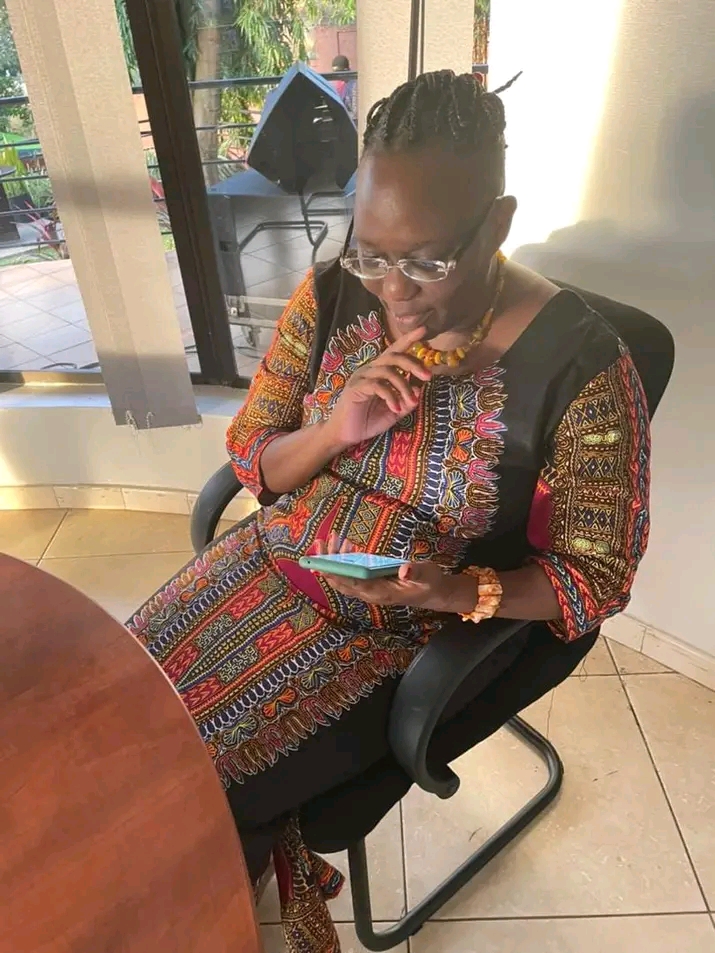
Featured photo @ Mrs. Betty Anne Apio Owaraga




 the Humanist view
Let’s Chat…