Yesterday, 11th December 2023, while his symptoms were being managed at Pallisa General Hospital, a government owned hospital, in the wee hours of the morning, our Odongo David rested at a tender age of only nine years. Odongo, was the son of my younger brother, Sam Owaraga, son of my late father’s late brother, Aglasio Okudo (he who rested on 3rd September 2021).
Yes, Sam is named after my late father Eng. George William Obityo Owaraga (he who rested on 1st November 2020). Both my papa Owaraga and papa Okudo were sons of my late grandfather, even though of different mothers.
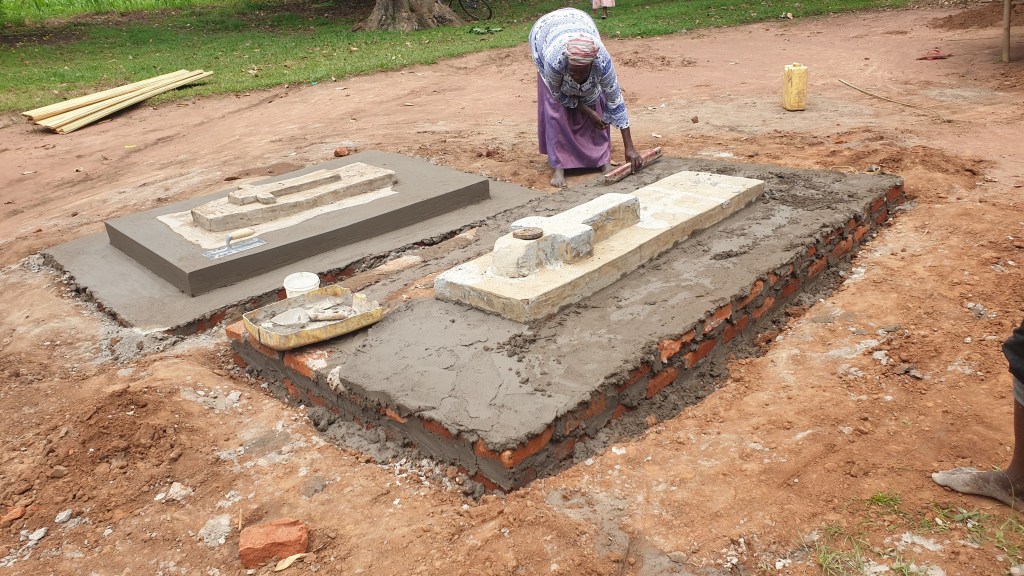
Today, Odongo’s remains have been laid their final resting place at the burial grounds of the line of Chief Ejakait Yosia Engatunyun, his paternal great grandfather, located at our ancestral home in Kadoki Village in Pallisa County in Pallisa District.
Odongo was unfortunate to be among the 2.8 percent of the 900,000 children annually born in Uganda while afflicted with sickle cell disease. He lived four years more than is expected of 80 percent of children born in Uganda with sickle cell disease, who presumably die before reaching their fifth birthday.
Read more about it in “An Up-date on the Prevalence of Sickle Cell Trait in Eastern and Western Uganda,” by Andrew L. Okwi et al.
Odongo fought a good fight and so did his parents. Albeit being a smallholder farming household, my brother Sam’s household put up an admirable fight to help Odongo live a bearable life, irrespective to the disease. But all odds were against them.
“Sickle cell disease is a group of inherited red blood cell disorders that affect hemoglobin, the protein that carries oxygen through the body. Normally, red blood cells are disc-shaped and flexible enough to move easily through the blood vessels. In sickle cell disease, red blood cells become crescent- or “sickle”-shaped due to a genetic mutation. These sickled red blood cells do not bend or move easily and can block blood flow to the rest of the body. The blocked blood flow through the body can lead to serious problems, including stroke, eye problems, infections, and episodes of pain called pain crises.”
United States Government National Heart, Lung and Blood Institute
Yes, there is a cure for sickle cell disease, but I doubt it is available in Uganda; and if it is, I doubt it would have been accessible to Odongo and his smallholder farming household in rural Uganda. For context, a treatment for sickle cell disease, recently approved in the United States, is priced US$ 2.2 million (about Shs. 8.4 billion) per person. Read more about it here.
Pallisa is in Bukedi Sub-Region and according to the most recent household survey by the Uganda Bureau of Statistics, the annual incomes of 93 percent of household in Bukedi are less than Shs. 10 million. Meaning majority of households in Bukedi survive on less than Shs. 830,000 per month, which is less than Shs. 28,000 a day.
Typically, Uganda’s household size is five persons. Be that as it may, before the death of Odongo, my brother Sam’s household was of eight people – two parents and six children. It is likely, therefore, that the members of Sam’s household are surviving on less than Shs. 3,500, which is less than one US dollar a day. It is no wonder that 66 percent of household in our region, Bukedi, are food poor.
Since they are materially poor, the only option that families afflicted and affected by sickle cells disease in Uganda, in general, and in Bukedi, in particular, have to sustain the lives of the afflicted are treatments that simply manage the symptoms. Read more about them here.
Two questions come to mind:
- To what extent are Uganda public hospital staffed and equipped to manage symptoms of sickle cell disease?
- What should the government do in support of those afflicted and affected with sickle cells disease?






Let’s Chat…