If we ignore our own culture what more will happen to the generation a head?
How will the next generation know where they came from?
Who will teach them if we fail to learn from our elders, who are diappearing without us learning the basics about cultural norms?
I am a student of public health and in a health perspective its right to eat traditional foods.
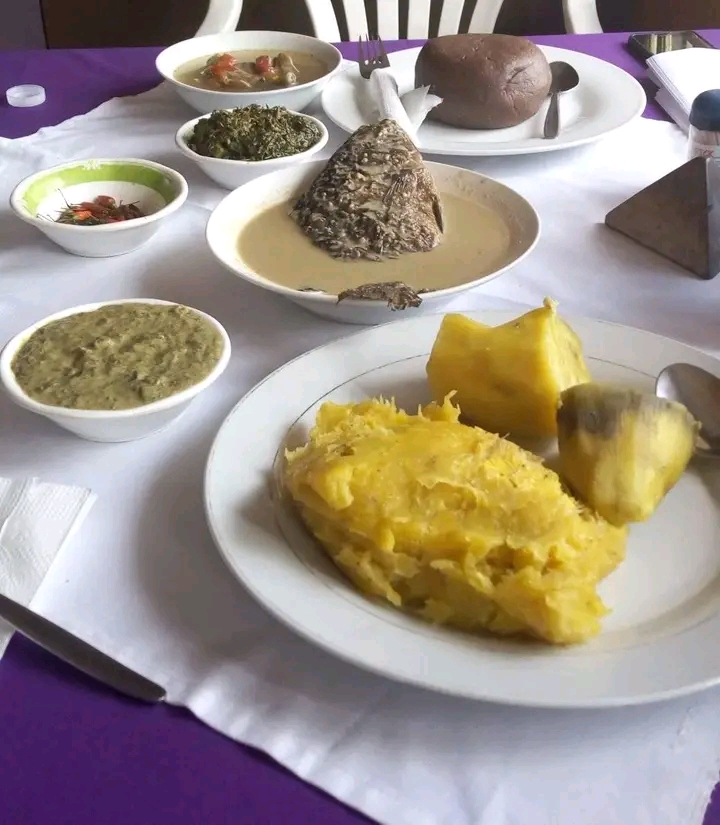 Lunch at House of Olel: Ugandan cuisine – Matooke (green cooking banana), sweet potatoes, emalakany cooked in groundnuts sauce, smoked fish cooked in groundnuts sauce, millet ugali, amaranth and beef.
Traditional foods build our security, organs and improve on immunity. This is true for organic foods, unlike inorganic foods that have been modified.
Look at a future trend as our traditional foods are disappearing. What will happen to our health systems in the body?
That is why we shall complain, of heart diseases.
We, as Iteso, eat eboo (cowpeas leaves), groundnuts, among others, that improve eyesight and many benefits.
We need to improve on our diet. Not to consume certain foods, because of self-esteem.
It only backfires when one gets a complicated illness that not even their money can help.
Remember, we live our lives once – emamei ecie odula, Iteso proverb meaning there are no spare parts in storage.
I read “Going back to our roots & be culturally rooted” and like it for that fact that it signals to fellow Africans, Ugandans, to embrace our cultural diversity, norms, and values as part of success in the future.
I really agree with the writer, Norah Owaraga, that what we do today determines the future.
The content of this post is a comment left by Emmanuel Olupot in reaction to “Going back to our roots & be culturally rooted.”






Let’s Chat…