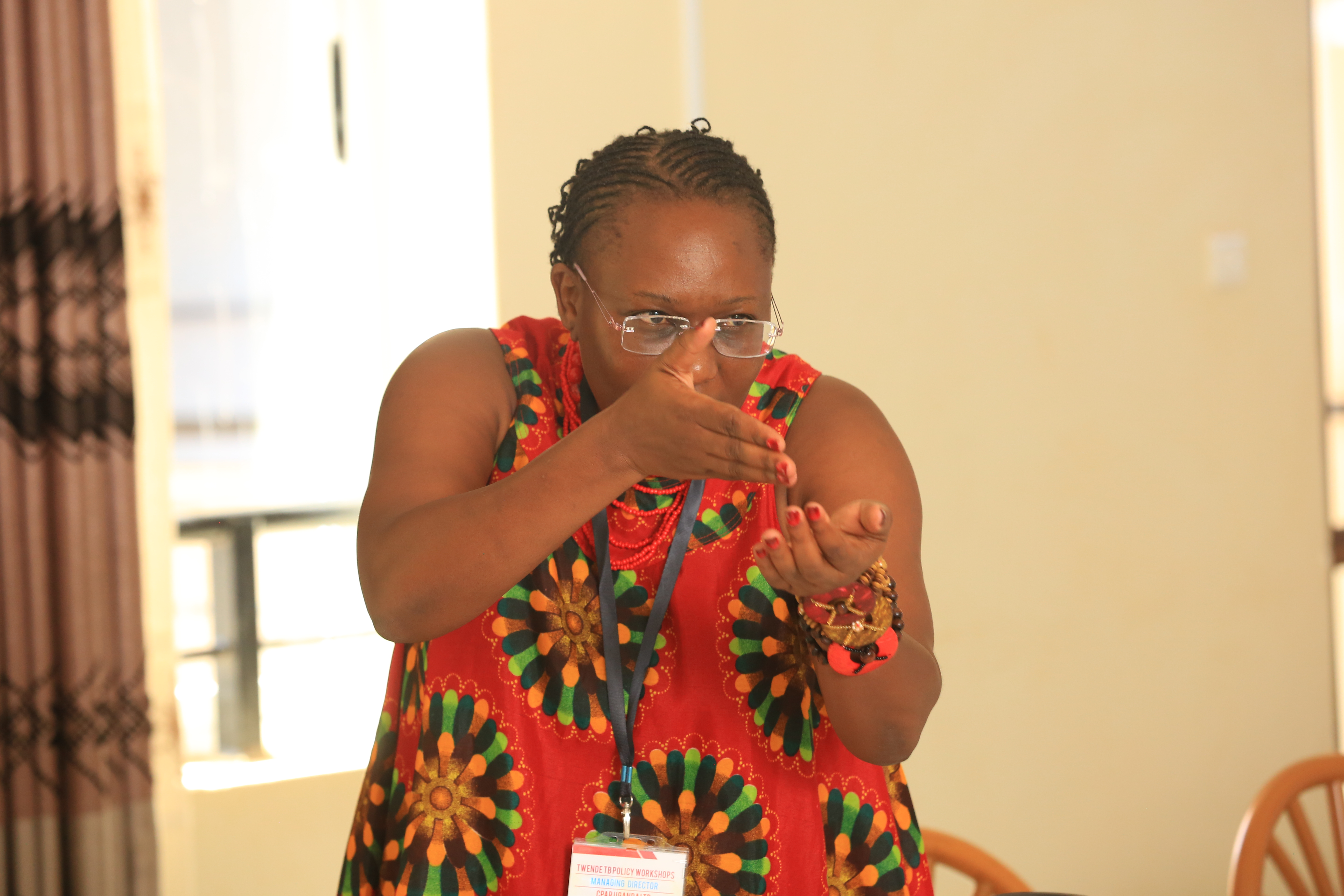

And so it was that on Sunday, 3rd September 2023, our papa Omio Stephen, who died on 30th August 2023, was laid down his final resting place at his chosen spot at his home in Kadoki Village in Pallisa District.
Papa Omio was the last surviving son of my paternal grandfather, the late Ejakait Yosea Engatunyun, aka Simba (the lion chief), who was kidnapped as a child and was raised in the court of the Buganda Warrior and Statesman, Semei Kakungulu.
Papa Omio was considered and he identified in word and practice as a devout Catholic. Thus, with great pomp and ceremony, his soul was accorded a full Catholic funeral – the vigil, the funeral liturgy and the committal. Moreover, the latter two ceremonies were conducted and led by none other than a Catholic Priest – a Father.
Like most Iteso Christians, unlike the late Hon. Kato Lubwama, papa Omio wasn’t overt in his adherence to our traditional Iteso culture. But, nonetheless, to a significant extent, he did not fully abandon his identity as etesot, a male of Iteso descent. Including, practicing Iteso culture that contradicts with modern day Catholicism and as it is prescribed for and in Uganda.
Papa Omio was a polygamist, for example, who is survived by three mothers of his 11 children. Two of the mothers of his children – toto Apolot (his first wife) and toto Asio (his second wife) he married under Iteso customary law. Much later and in advanced age he denounced his marriage to toto Asio, in order that he would have a church wedding with toto Apolot.
According to Iteso customary marriage rules and therefore the laws of Uganda, however, although the Catholic Church forced papa Omio to publicly denounce his marriage to toto Asio, technically papa Omio remained married to toto Asio until he died. And, therefore, a polygamist he was untill his death.
The conditions for legally ending a marriage under Iteso customary law is the return of dowry. As far as I know, papa Omio did not do so. In fact, toto Asio continues to live on and to farm the land that she was allocated use rights as the wife of papa Omio. She did not return to her people. She is a wife and mother in our extended family of the late Chief Engatunyun.
It was thus fascinating to watch how papa Omio being a staunch catholic was highlighted during the catholic religious rituals at his funeral. Seemingly, for example, toto Apolot was acknowledged as his only wife. At the rite of committal service, for instance, toto Apolot sat with other Mothers’ Union members, dressed in their uniform – yellow gomesi and in a prominent spot.
In contrast, during the catholic religious parts of papa Omio’s funeral, toto Asio could have been mistaken for an ordinary mourner and not the wife of the deceased. Be that as it may, however, in the official records of our clan, Ikaribwok Isekelio, both toto Apolot and toto Asio were accorded equal status as wives of papa Omio.
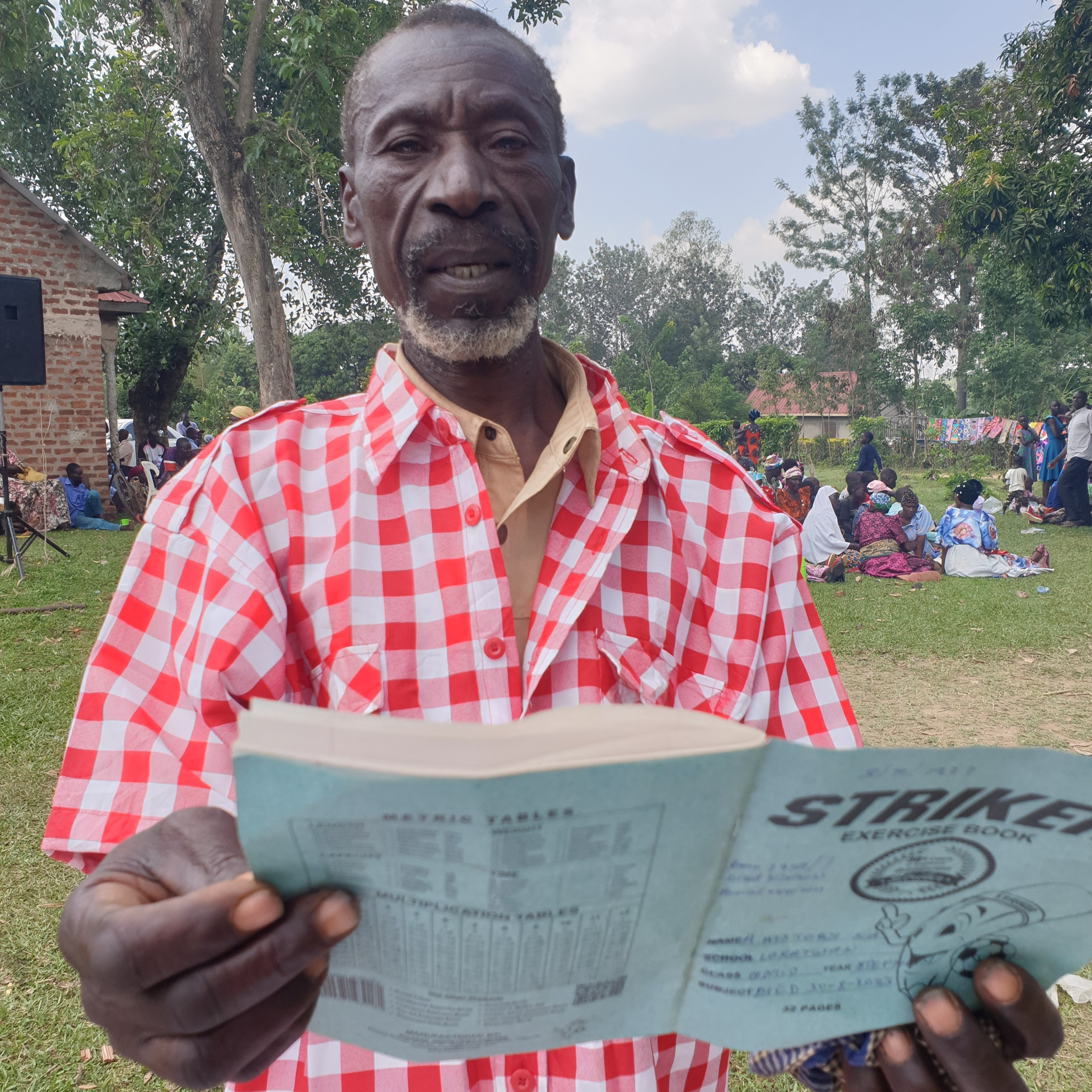 At the committal ceremonies, I caught up with Ejakait Okudo Peter, Secretary to Lo’Ebuku (clan head) of the Ikaribwok Isekelio, as he was reviewing the historical eulogy of our late papa Omio, written in Ateso, to be read to mourners and to be entered in our clan records. He allowed me to read through.
In choice of his heir, papa Omio, as well, balanced the scales. He chose his eldest son with toto Apolot to be his heir; and at the same time, he named his eldest son with toto Asio, as regent of the heir.
By the way, papa Omio is survived by six of his children (3 male and 3 female) with toto Asio; four of his children (2 male and 2 female) with toto Apolot; and one female, his eldest child, with toto Alobo, with whom he never married.
Apparently, in gifting his estate to his children, in contravention with Uganda succession laws, papa Omio stayed true to outdated Iteso patriarchal and sexist practices that prescribe inheritance is patrilineal.
In his lifetime, Papa omio ensured his lands were gifted to and shared among his sons, seemingly with equality. I am not aware of his daughters similarly being gifted land in their own right. Some of them, moreover, are unmarried.
Papa Omio was educated within the Uganda school system and for many years until his retirement, he was a technical school teacher. He taught in Madere Technical School, Kasodo Technical School and Nagwere Technical School, among others. He was thus endowed with the ability to read, write, articulate and comprehend discourse in Ateso, language of Iteso and in English, Uganda’s official language.
He was thus likely aware of the recent amendments to Uganda’s Succession Act which outlawed gender discrimination in gifting property of the deceased. After all, papa Omio was an ardent listener of radio and he likely followed the robust debates that culminated in the Parliament of Uganda passing the Succession Amendment Bill 2021 and President Museveni signing it into law in 2022.
In the case of papa Omio, indeed, one gets insight into how Christianity, in this case Catholicism, on the one hand; and outdated Iteso inheritance traditions, on the other hand, align in belief and promotion of patriarchy. So, for me, the answer is: “yes and no” to the question: “can one truly be an Iteso Christian within an Iteso context.”
Yes, there are instances when Christian practice has accommodated Iteso tradition, adapting Iteso norms and ‘making them Christian’. Case in point, the practice of amudar ekurwon on the third day after the burial – the putting out of the ‘mourning fire’, collecting the ash from the ‘mourning fire’, disposing of it and declaring the official funeral ceremony over.
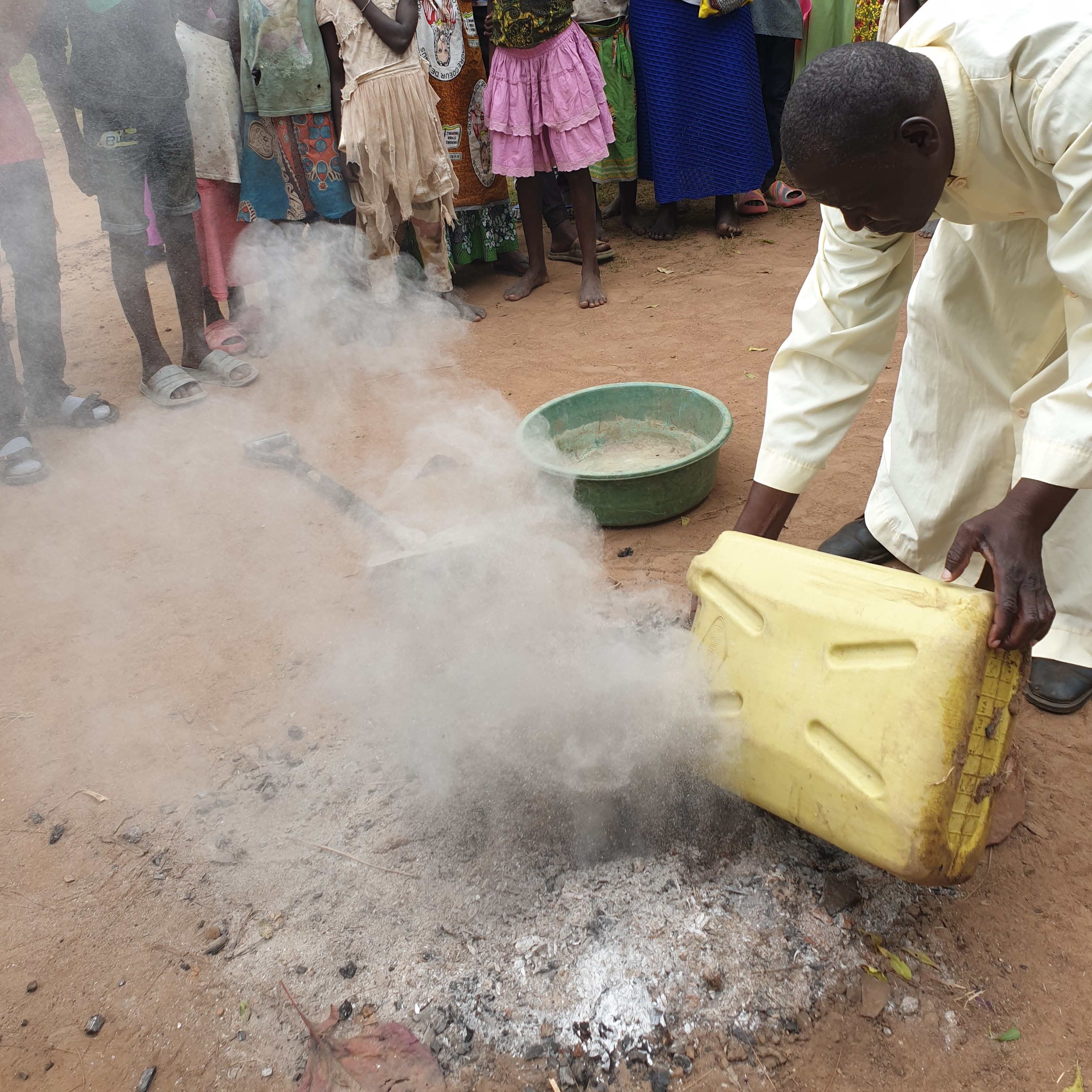 Church leader performing amudar ekurwon on the last day of the funeral of papa Omio.
In the past, Iteso elders and traditionalists were the ones who performed the ceremony of amudar ekurwon. These days, for those like papa Omio who professed Christian, it is the church leadership who perform it. For those so persuaded, the manner in which it was done in the past and within Iteso norms, they denounce as barbaric.
There is no doubt in my mind that for many Iteso, I dare say all Iteso, who desire to revel in both their Iteso culture and at the same time profess Christianity, they have no choice but to lead double lives in terms of their identity, morality and politics – Christians in public; while adhering to Iteso traditions in private.




 the Humanist view
Let’s Chat…