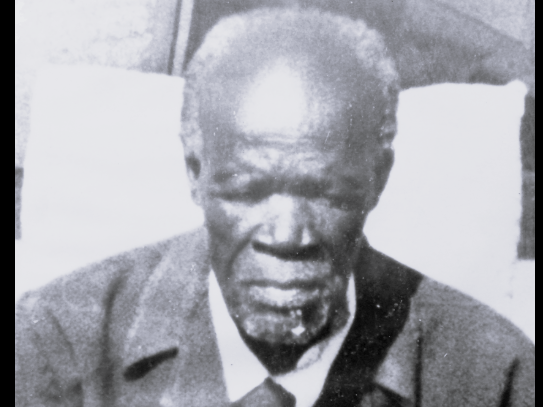
My grandfather, Chief Ejakait Yosia Engatunyun (aka the lion, aka Simba), since rested, is on my mind.
I remember how he often used the question: “Esawa ebala meka e’Mbale?” (What is the time on the clock in Mbale?), in order to silence those who crossed him and or who violated his rule or ruling.
No surprise, therefore, that among those who faced the Chief’s wrath were those with poor time keeping habits.
During his reign, there was a time for each and everything to be done within his realm, in Pallisa, over 55 kms from Mbale; but in sync with the time of the Mbale Clock Tower.
Ejakait Yosia Engatunyun (RIP), Chief of the Ikaribwok Isekelio Clan of Iteso of Uganda  “Esawa ebala meka e’Mbale?”
 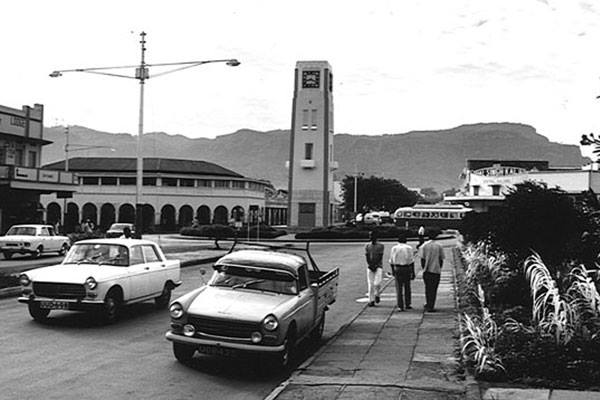 Mbale Clock Tower, built in 1938 in honour of King George V of Great Britain (Source: Bugisu Professionals Forum – Uganda)
Doing things out of the designated time, earned you the Chief’s relegation to “mukopi” (singular) or “bakopi” (plural) – Luganda for one without manners or of lowly status.
Mark you, in some cases, the Chief accompanied relegating you to a mukopi or bakopi with severe physical punishment.
And so, the Chief was a feared and revered in equal measure, I think.
I expect you are wondering why my late grandpa, whose lineage is of Iteso, spoke Luganda to his subjects.
Folklore has it that as a child, while he was tending to his family’s herd of cattle, the Bakungulu (Semei Kangulu’s men) abducted him and he was raised as part of Kakungulu’s household.
The impact of him being raised as such, explains some of his pronouncements and tendencies, now that I think about it.
He truly believed in the superiority of Baganda culture, as the Baganda naturally do, and seemingly, as the British colonialists did.
“Europeans admired Buganda and often praised the kingdom, considering it the pinnacle of “native political evolution.” Early travel, missionary, and colonial accounts often called the Baganda the “most advanced and intelligent of all central African societies (source Wikipedia).”
While, at the same time, British colonialists and the Baganda too believed in the inferiority of Iteso.
“Iteso are backward and deserving harsh treatment … Iteso captives as well as their cattle were herded (by the bakungulu) into huts which were then fired … (and this) served the purpose of dealing with the primitive community” (Source: Dr. Ben Jones book: Beyond the state in rural Uganda)
Reading “Teso society through the twentieth century,” a section in Jones’ “Beyond the state in rural Uganda,” has me reflecting on what I experienced interacting with my grandpa. And what I learned of his legacy through folklore.
Was he, in fact, simply a re-captive with a black man’s burden?
“Re-captives” was used to described African slaves who were ‘saved and set free’ before they made the journey to the United States of America. According to Davidson, re-captives believed their own African peoples had let them down – sold them as slaves; while peoples of the global-west had saved them. So, the re-captives in establishing their new homes or nations or culture in Africa wanted to be like those of the global-west and not re-discover their own original African culture which they designated inferior.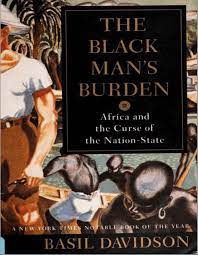







Let’s Chat…