
Listening to and reading about the ongoing debate on the Private Member’s bill by Hon. Sarah Opendi, the Marriage Bill 2022, one may be persuaded to believe that customary laws of the first nations of Uganda are devoid of logic on matters marriage.
“The Marriage Bill 2022 seeks to provide a comprehensive legislation on matters relating to marriage considering that the Marriage Act enacted 118 years ago has not been amended.”
Parliament of the Republic of Uganda
The discussion of the bill and the bill are loaded with what Nobel Laureate Wangari Maathai characterised as “demonisation of indigenous African cultures … the deliberate trivialisation of African cultures.” Case in point, for example:
“Opendi cited bridal gifts as one critical area that the bill will redefine. The bill recognises marriage gifts but proposes that gifts should not be among the requirements for marriage. As such, the proposed law criminalises a spouse who demands for a refund of gifts with a penalty of not less than one year imprisonment. Opendi says this will go a long way in protecting the rights of women in marriage, noting that often, women have been ill-treated on the basis of bridal gifts.“The Constitutional Appeal No. 02 of 2010 ruled that bridal gifts should not be refunded, this will be upheld, women cannot be equal partners in marriage as long as gifts are mandatory for marriage,” Opendi said.”
Parliament of Republic of Uganda
Within Iteso customary law, a distinction is made between bride-price and bridal gifts. In Iteso customary marriage, apart from bride-price, certain presents are customarily given by the bridegroom (source: J.C.D. Lawrence, “The Iteso”):
- Egoye loerapia ikisina (a cloth to cover the breasts) – gifted to the presumptive mother-in-law; for a son-in-law may not look on his mother-in law. Formerly, egoye loerapia ikisina consisted of a goat skin skirt.
- Enyamit (escort) – a cloth is gifted to the women who escort the bride to her husband’s house. Formally, enyamit consisted of necklaces or bracelets.
- Ikisina (‘payment for the breasts’) is gifted to the presumptive father-in-law – a kanzu or other articles of clothing and a cash present. Formerly, it consisted of a spear, shield or a he-goat.
The norm in Iteso culture is that bridal gifts are not repayable in the event of dissolution of marriage, except for Ikisina.
What then does the Marriage Bill 2022 quantify as bridal gifts?
Seemingly, the bill quantifies both bride-price and other bridal gifts together as one and the same. This is consistent with the prevailing perception among many Ugandans and others non-Ugandan who are ill-informed about the customary laws of the first nations of Uganda. Perceptions such as:
“These days, most men have pride not out of love for the woman they want to marry, but to create fame among his future in-laws. So that he is held in high esteem, he organizes exaggerated marriage ceremonies. The parties are extravagant, involving expensive dresses, gifts, drinks and food meant to entertain friends, the whole village and the next. Exaggerated ceremonies cause people to be blinded and no one will ever believe or protect women in cases where they are mistreated or want divorce … The man will shamelessly demand for the repayment of the bride price by her parents.”
Betty Makuma, Change Agent, writing about marriage norms and practices of the first nation of Bugisu
Failure to distinguish between bride-price, the requirement for legalisation of marriage, and bridal gifts, as Makuma seemingly does in her observations above, is a misnomer which forms part of the premise of the Marriage Bill 2022.
 My brother, Chief Emmanuel George Owaraga II with his wife, Magloire Kindoki, shortly after their third marriage ceremony in Paris in Frances. Prior, they had had an Iteso Customary marriage hosted at our ancestral home in Kadoki in Pallisa and a Christian marriage at Komolo Church of Uganda in Pallisa.
As it is the case with all other marriage types that are legal in Uganda – Christian, Islamic and by registration with the Uganda Registration Services Bureau, there are conditions for dissolution of the marriage. In the context of Iteso customary law, that condition is return of the maximum permitted bride-price and not the bridal gifts.
And so, for example, if my late father’s brothers had succeeded, to cause the dissolution of his marriage to my mother, Iteso customary law and the laws of Uganda prevailing in the 1960s when my parents got married, provided that my late maternal grandfather would have had to only repay the maximum-permitted bride-price – that is five cows. This is despite the fact that my father chose to pay a bride-price of 15 heads of cattle, 7 goats, 1 sheep and 1 cock.
In the context of Iteso customary law, clauses in the Marriage Bill 2023 legislating against the return of bridal gifts are therefore redundant. Repayment of bride-price is necessary for dissolution of marriage in the context of Iteso customary law. A woman who was married under Iteso customary law to re-marry when bride-price has not been repaid by her prior husband, means she violates the laws of the Iteso and of Uganda, which do not allow polyandry – a woman married to more than one man.
Simply put, in the context of Iteso customary law, the bringing of and the content of the Marriage Bill 2023, is premised on a false premise. And with seeming intent to have a one-size fits all marriage for all Ugandans that is informed by Anglo-Saxon Christian marriage ideals. The tone of the bill seems heavily influenced by how ideals concerning Christian Marriage are crafted and taught in Ugandan churches.
Potentially, moreover, if the bill became law, it may weaken the marriage and divorce rights of women that are married under Iteso customary tenure. Read a detailed explanation how so in Marriage Bill 2022 versus Iteso Customary Marriage – Part 1
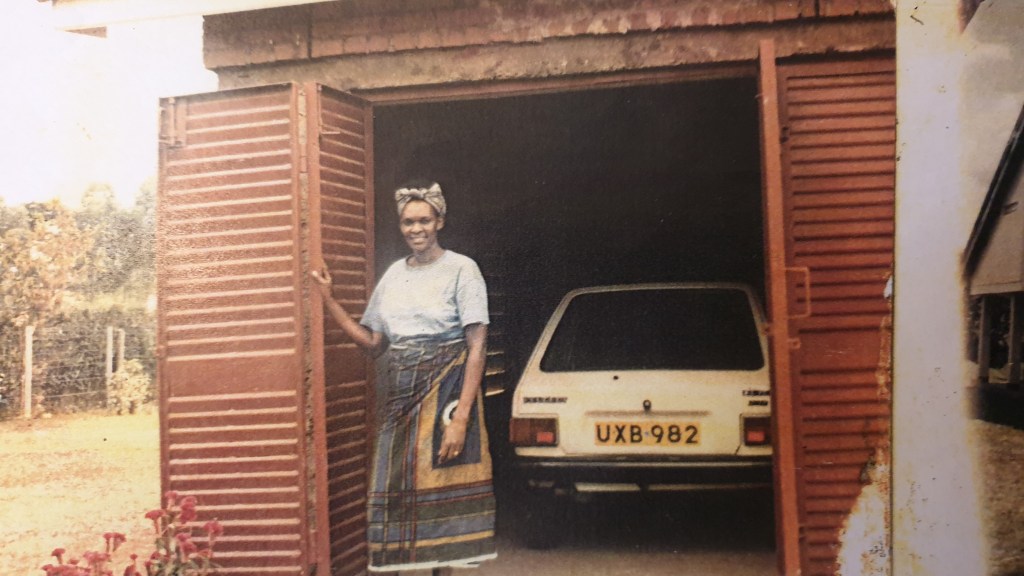
Featured photo is of my mother, Mrs. Betty Anne Apio Owaraga, at her marital home in Mbale, when she and my late father decided to separate homes, but stay married.




 Humanist
Let’s Chat…