
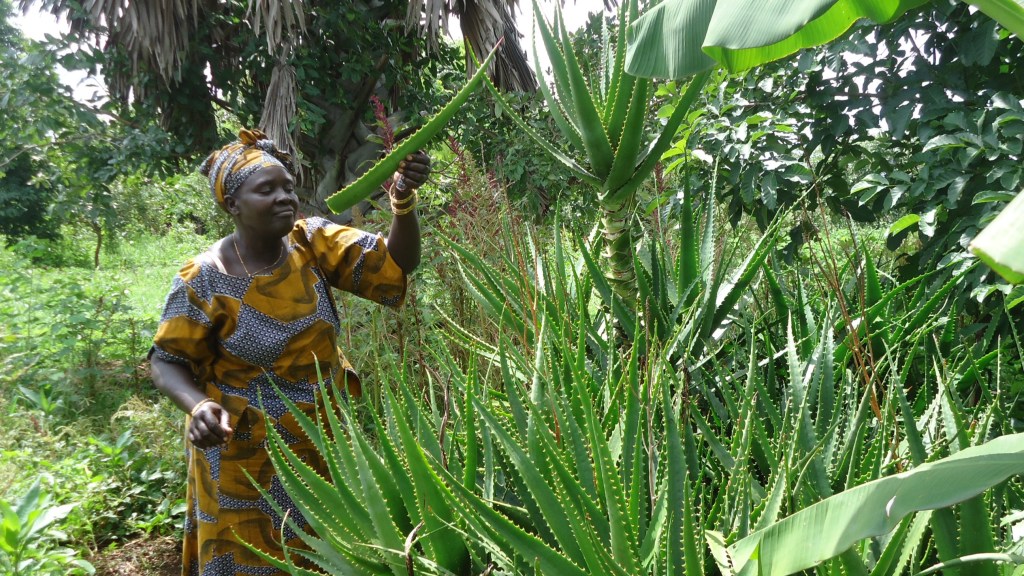
One of the most profound experiences that I have ever heard is a home visit my team and I made to a beneficiary of CPAR Uganda, Mrs. Jamila Eton in Dokolo. At the time and to this day I remain flummoxed at how Uganda’s knowledgeable, innovative and hardworking rural smallholder farmers are not the ones that are in charge of the back bone of Uganda’s economy, agriculture.
How is it that as a nation we privilege those with theoretical knowledge, moreover likely of exogenous origin, over those with practical knowledge about our homeland? Let me share an example to make my point. About ten years ago when we visited Mrs. Eton, for example, we found Aloe vera growing at her home. And she did eloquently explain to us its benefits.
Indeed:
“Aloe vera is rich in vitamin C, E and beta carotene which gives it its nourishing and anti-ageing qualities. It can moisturise the skin without making it greasy, which makes it a great buy for those with oily skin.
It is suggested to drink aloe vera juice early in the morning on an empty stomach because it improves digestion and cures any kind of stomach trouble. And, you know that if you’ve got a healthy inside, it’ll give you a glowing outside which in this case is radiant skin.”
Daily Health Tips
For many years now I use aloe vera based products to keep my skin nourished. This year, I decided to begin using “Love JoJo” brand, which is 99 percent aloe vera gel, for my face skin. The next time I went to my local supermarket, it was not there and so I shifted to the available brand “ODEON”. So far so good.
However, both brands are imported. One from the People’s Republic of Korea and the other from the Republic of India. Just wondering, does it take rocket science to extract aloe vera gel? How come we do not have our made in Uganda aloe vera gel on our supermarket shelves?
I must admit, I have never tried to drink aloe vera juice. But if it offers such benefits as improving digestion and curing stomach troubles, why isn’t aloe vera juice that is made in Uganda, and cleared by the Uganda National Bureau of Standards, widely available on our market?
Moreover, the way that Mrs. Eton was growing aloe vera, in addition, in fact, was in such a way that it improved the aesthetic value of her home. I honestly, don’t think that it needs the re-allocation of land away from other food crops, in order to grow aloe vera. I think it could be planted as a boundary crop and on road reserve lands, replacing grass that is not edible with an edible, high value crop in terms of nutrition and economics.
Mrs. Eton’s smallholder farming operation with a variety of enterprises within, can be best describe a cottage farming industry; and it is what should be taught and practiced in all schools in Uganda. Click here to read more about Mrs. Eton’s inspiring innovations.
Profiled photo @ Mrs. Eton at her home






 Humanist
Let’s Chat…