
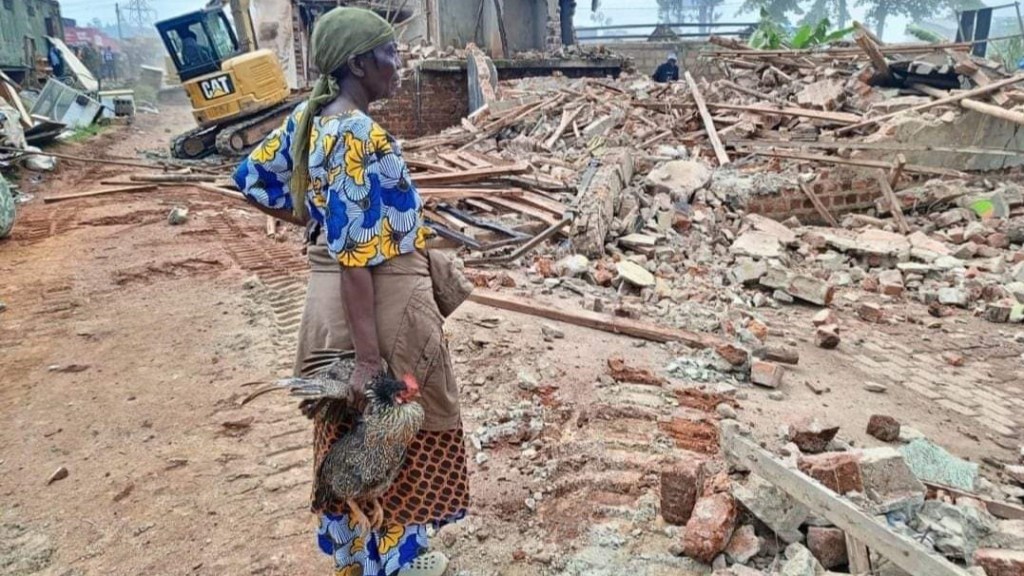
Namuddu Ruth, a 69-years old widow is in despair after her home in which she has lived since 1996 and her rental houses at Lubigi Wetland in Ganda-Nasere Village in Wakiso Sub-County in Wakiso District in Buganda Kingdom were last week demolished by the National Environment Management Authority (NEMA).
She has since become the ‘poster image’ of the plight of thousands of families that have fallen victim of NEMA’s “countrywide wetlands restoration exercise.”
“We gave them notices for a month, and some people vacated the place, and others refused to go. And for those who refused to leave, the NEMA helped them remove their structures,” William Lubulwa, NEMA Senior Public Relations Officer, is quoted by The Independent as having clarified.
Even though Lubigi Wetland is within land that is owned by the King of Buganda and his kin, NEMA has overriding powers over it. Perhaps a nuance that Namuddu and her fellow victims were not aware of and or did not fully understand.
After all, they had secured their landownership rights through purchasing their bibanja (plots of land) from their mailo landlord, making them bibanja sub-land owners; and who were paying the annual busulu (ground rents) to the Buganda Land Board.
They had reason to believe their land rights were secure. It is therefore understandable why the victims ignored the notice that NEMA gave them in 2021 to vacate the wetland within 21 days.
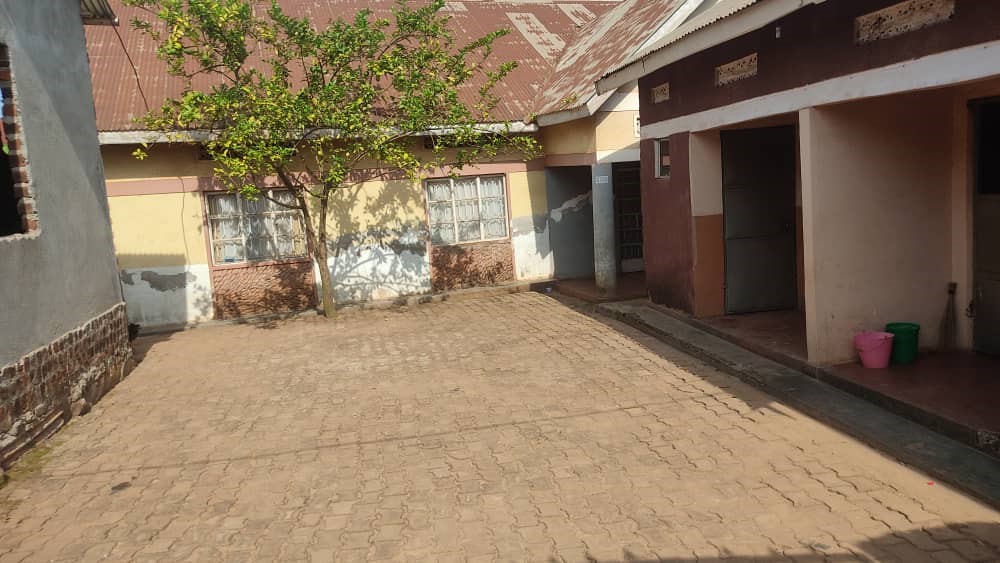 Namuddu’s houses before they were demolished.
Particularly so, since, in the case of Namuddu she had lived on the land for about 35 years already; and during which she had constructed permanent tin-roofed houses.
Which begs the questions:
- For three decades plus, where was NEMA to stop the victims from “illegally” constructing on and living on the wetland?
- Why for 30 years plus did the Wakiso District and Wakiso Sub-County planners not stop victims from constructing their residential homes and businesses on the wetland?
- Since NEMA and the planners, seemingly, neglected their duties in the first place and caused victims to build homes and businesses on wetland, shouldn’t they bear responsibility for compensating the victims?
- Shouldn’t NEMA and the Wakiso District Local Government bear responsibility to provide victims with alternative land to relocate to?
The inhumane manner in which NEMA officers are conducting the “restore wetlands” operation opens up wounds of land injustices from legacies of colonialism and the imposition of a nation-state on the first nations of Uganda.
At its formation the Republic of Uganda had no land; the land belonged to the people and administered through more egalitarian land tenure systems of the first nations, such as Buganda. The formation of Uganda was not negotiated among the first nations, it was in line with the colonialist principal of effective occupation.
The English colonialist deliberately suppressed the laws of the first nations. What is considered customary tenure within State Law is a concoction that the English colonialist made up in order to subjugate and undermine the laws of the first nations.
Defining land ownership by use rights, as the first nations did, has been abandoned, and the dominant definition of land ownership is that which confers absolute individual rights over land and which treats land as a commodity.
The commodification of land seems the major reason for the eviction of the less privileged from wetlands, while the more privileged and powerful capitalist are instead given permission to destroy wetlands through reclamation.
Making the patronising manner that political leaders are intervening on behalf of the victims offensive, to say the least. Dishing out crumbs and promising more “political mileage assistance” to the victims, instead of holding NEMA officers accountable and responsible.
For example, in addition to issuing notice to evict, did NEMA liaise with the other relevant authorities to come up with a humane manner in which the re-location of citizens and their businesses could have been done? If the answer is no, which I suspect it is, why not?
A government removed from the people should not continue to be business as usual.
Recommended reading for more of my thoughts in “Land Tenure, Access to Land and Food Security in Uganda”, a chapter, pages 3-10, in a Friedrich Ebert Stiftung publication, “African Perspectives on Social Justice – Land, Food Security and Agriculture in Uganda.”
Photos Source: both photos in this post @ David Lewis Rubongonya on X







 Humanist
Let’s Chat…