
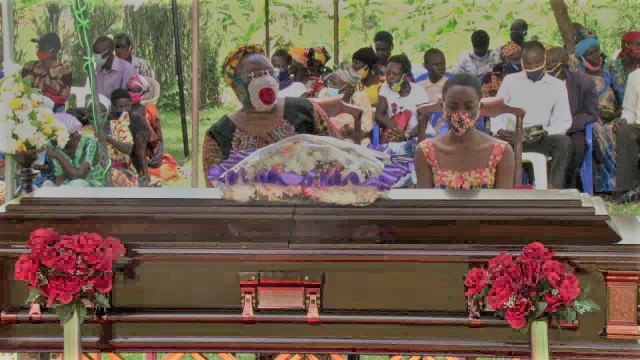
This morning, through the SAPIENS Newsletter, Leyla Jafarova spiritually transported me to Azerbaijan and Armenia; and then to northern Uganda. This is as I read her essay, “For families of missing loved ones, forensic investigations don’t always bring closure.”
The essay enabled me in “my future travel plans are to travel back in time” quest. And as I traveled back in time reading the essay, it made me feel comforted for it gave me the human connection I continue to need as I navigate and make sense of the aftermath of my late father’s death.
Unlike some of the kin Jafarova wrote about, I have a grave to go to. Nevertheless, I feel I have in common with them unresolved questions. For some of them, of course, the biggest is the whereabouts of their loved ones and or the remains of their loved ones. Our spiritual distress, however, I think is similar.

We wonder whether the wishes of our loved ones are fulfilled so their spirits may be at peace. As are our intentions to preserve our loved ones’ legacies here on earth. The dreams about and visitations from our loved ones feel real. Coupled with sharp memories, these social-cultural aspects are a powerful tool for getting closure, I agree with Jafarova.
A powerful unexpected learning for me from the essay is the realization that I should nurture a more sympathetic appreciation of the mental and spiritual ill-being of the people of northern Uganda who are directly affected by the Kony conflict. I had never really thought consciously and in depth about kin of those gone missing and or killed during the Kony conflict.
The essay gave me a light bulb moment. It revealed to me how ethnographic studies confirm that some kin of the victims of the Kony conflict are “experiencing psychosocial, spiritual, economic, and other negative impacts related to improper burial from the Lord’s Resistance Army Conflict.”
It triggered me. I thought about when three years ago, I decided to challenge, in Courts of Law, what I am convinced is a forged document purported to be the Will of my late father. One of the ones I am convinced is among those who forged it, had the audacity to rubbish my search for closure. She said to me, “you are wasting your money.” My search for the truth is worth all the money I spend to arrive at it, she doesn’t realize.
Case in point, one of the issues that confirms to me that the purported will of my late father is indeed forged, is its false prescription of his chosen burial grounds, which differ from his living Will verbalized to many and on several occasions. So, when the forgers attempted to bury his remains in false burial grounds, in the location of the sewage installations at his home, they were overpowered by the many he had spoken to about where his remains should be laid to rest.
I take comfort that his grave is located where he wished it to be. However, because of intimidation, threats of violence and outright vandalism by the forgers I haven’t quite fulfilled the design of the burial grounds as we had discussed with him. This is a source of spiritual discomfort for me, but I am resolved and hopeful that it will come to pass in my life time.
And so, yes, absolutely, I agree with Jafarova, that forensic scientists, “must recognize the value of incorporating personal histories, shared beliefs, and broader political circumstances into their work.”




 Humanist
Let’s Chat…