

There is evidence that ‘Urban-slumitisation’ of Iteso villages, which is done in the name of “development” or “modernization” and which has stealthily changed the way in which land and food crops are utilized, has significantly contributed to degrading the composition of atap.
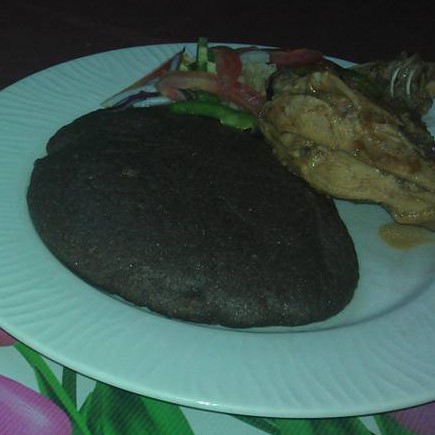 Atap of millet.
Atap, often mistranslated as millet bread, is the staple food of the Iteso people of Uganda (Lawrance 1957). However, the preparation of bread, requiring baking, is different from the way in which atap is prepared – adding flour to boiling water and mingling; thus atap is more similar to ugali than it is to bread.
The Iteso are the fifth largest first nation of Uganda (Uganda Bureau of Statistics 2006), making up at least 6.4 percent of the country’s population. They predominantly occupy Teso Sub-region, which is a significant section of north-eastern Uganda.
About sixty years ago the composition of atap was 100 percent finger millet (Eleusine coracana), believed indigenous to Uganda or of Ethiopian origin.
According to the National Agricultural Research Organisation (NARO), finger millet is the second most important cereal crop in Uganda after maize, in terms of meeting dietary and income needs.
Finger millet is a cereal that has been proven to contain:
- Protein – eleusinin – which has high biological value
- Calcium – 5-30 times more than in most cereals
- High content of phosphorus and iron
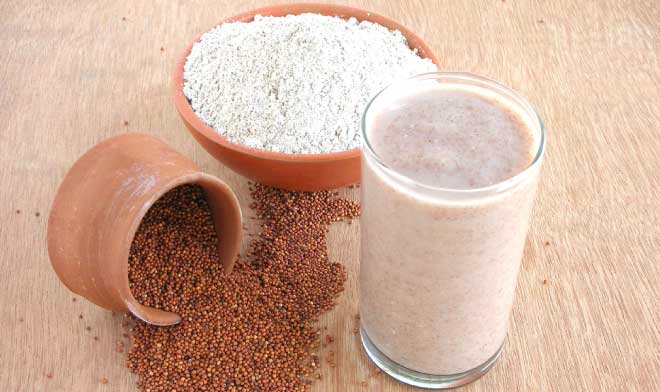
Indeed, finger millet is a nutrient rich cereal with nutrients not only crucial for human health, but nutrients which scientists have found deficient in other cereals.
Scientific studies in the past, in fact, found that children from finger millet eating parts of Uganda suffered less from nutritional-related diseases, as compared to those from banana eating areas in Uganda.
Regrettably, during the last 40 years or so, the composition of atap has degraded from being 100 percent composed of finger millet; to being composed of a mixture of finger millet-sorghum-cassava; then to sorghum-cassava; and increasingly, lately, it just consists of cassava.
 Atap which has cassava as part of its mixture; served with pumpkin leaves in ground nuts sauce.
Sorghum, according to scientists (Ebiyau and Oryokot 2001), was introduced into Uganda in AD 350 and has become the third most important cereal crop in Uganda, likely because of its ability to tolerate and produce good yields even in unfavorable weather conditions, such as in drought.
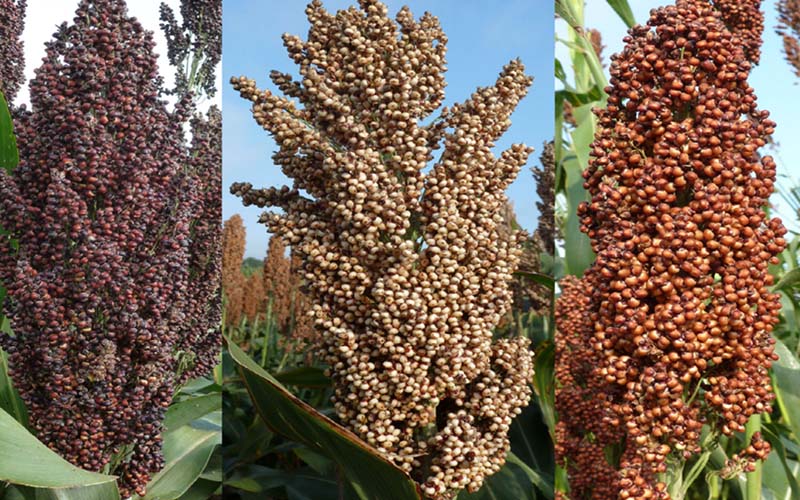 Sorghum varieties @ photo credit: National Agricultural Advisory Development Services (NAADS)
Whereas, according to researchers, sorghum mainly contains carbohydrates, it also contains traces of protein; and is rich in iron, magnesium, potassium, calcium and phosphorous. Nevertheless, the substitution of finger millet with sorghum lowers the nutritional value of atap, because sorghum does not contain some of the vital nutrients that are in finger millet.
The substitution of sorghum for finger millet in atap, however, is not as nutritionally catastrophic as that which substitutes plain cassava for both finger millet and sorghum in atap flour.
According to scientists (Otim-Nape, et al. 2001), cassava is not indigenous to Uganda, but when it was introduced into Uganda between 1862 and 1875, it was quickly adopted and, in terms of area cultivated, it is now ranked as Uganda’s second most important food crop, after bananas.
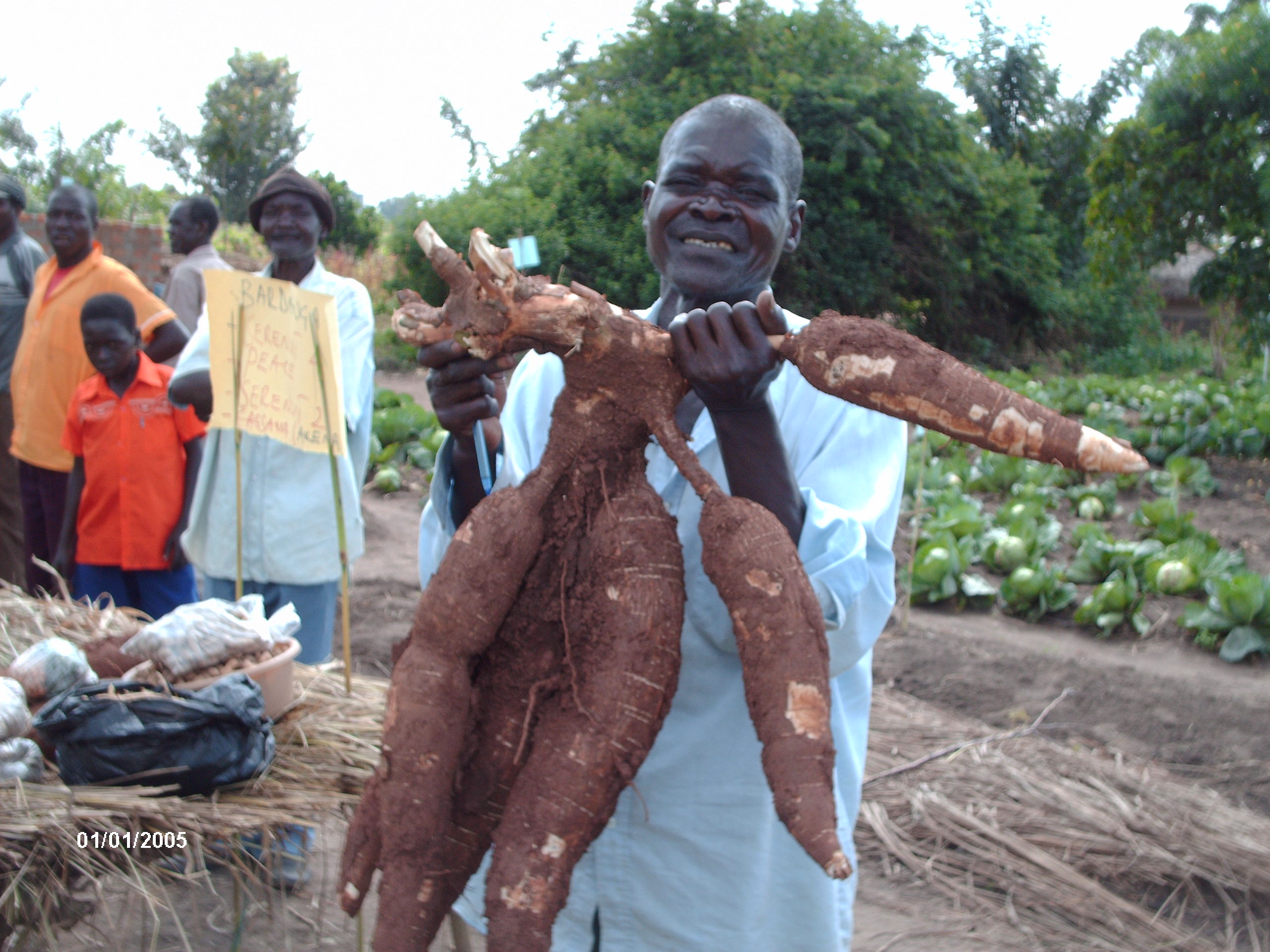 A CPAR Uganda beneficiary farmer proudly displays his cassava harvest at a CPAR Uganda event.
Nutritionally, however, cassava is very low in proteins and, therefore, it is inferior to finger millet and to sorghum.
Featured photo: Atap, fish and malakwang






 Humanist
Leave a reply to Favorite meals of Ateker cuisine – CPAR Uganda Ltd Cancel reply