“More Ugandans are happier to say I am a Muganda from Uganda before saying they are Ugandan. Or they say things like I am a Ugandan but from the north. Why??! This must stop. We are all Ugandans period!” Atuhaire Joan, in comment to “Uganda’s Ethnicity Politics.”
Why? Because identifying only as Ugandan renders me rootless and culturally dislocated. It would not fully answer who I am.
“The child shall be registered immediately after birth and shall have the right from birth to a name, the right to acquire a nationality and, as far as possible, the right to know and be cared for by his or her parents.” Article 7, 1 of the United Nations Convention on the Rights of the Child stipulates:
Iteso culture, of my people, indeed, takes the naming of a child seriously.
Among Iteso, through a name one can trace their lineage, heritage and history for generations. That is the power of the name among us, Iteso.
Among Iteso a name bestows upon a child belonging and roots.
I know for sure that this is the case also among other first nations of Uganda and the wider Africa.
I am fascinated by our names. Through our names, I learn a lot about different people of the world.
And through our names I share my learning and knowledge of our ancestors.
“This is the most glowing tribute to the rich diversity of African identity, that I’ve seen in a long while. The poem taps into the flowing depths of cultural symbolism, ethno-geographic metaphor, and social aspiration which define our quilted continent. Norah, this is an A+, inarguably! Surumani Manzi in comment to “A Poem about the meaning of our names.”
Not to identify as Atesot, a female from Teso, the territory of Iteso, renders my name Alinga devoid of meaning. And yet in that name is where I derive pride and belonging.
By the way, being tribalistic simply means “advocating or practicing strong loyalty to one’s own tribe or social group.”
Why should this be offensive that one prides in their identity?
And so, for me, my national identity is first Atesot, then Ugandan, then African. This is the least that I can do to contribute to the fight back against the ethnocide of our first nations of Uganda.
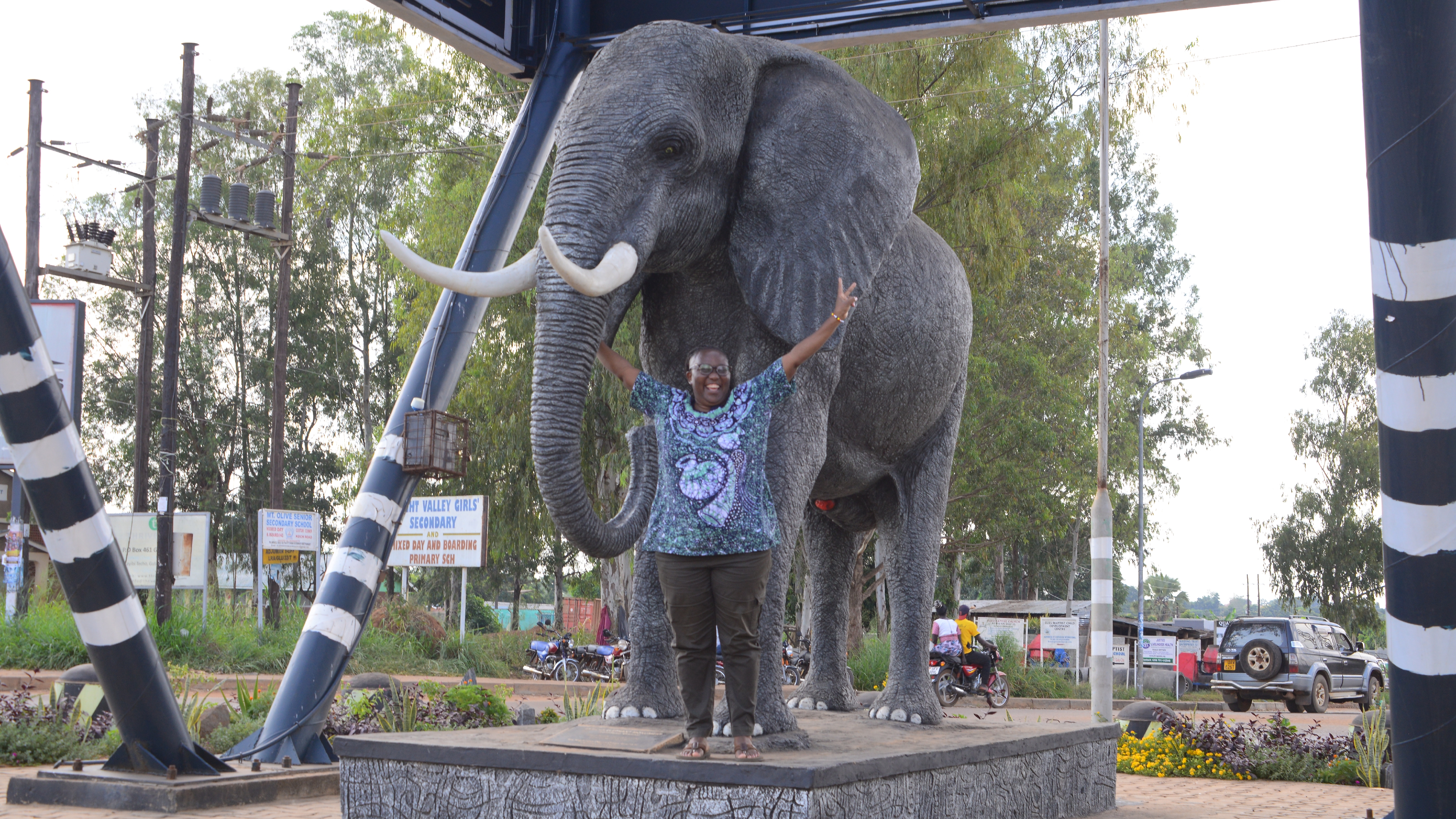 At the monument of lyec (elephant) at Gulu City, in Acholi in Northern Uganda. Folklore has it that elephants played an instrumental role during the migration of Acholi from Sudan. Elephants move together in groups and because of that they form wide beaten down paths, amidst grasslands and forests. Additionally, apparently all animals fear elephants and will scamper away from the elephants’ path. And so the migrating Acholi comfortably used the elephants’ path, also, like elephants, moving together in groups. The elephant to Acholi is reportedly a symbol of unity and strength.
As members of proud nations do, I am always proud and happy when my fellow Ugandans identify as among members of our respective First Nations.






Let’s Chat…